
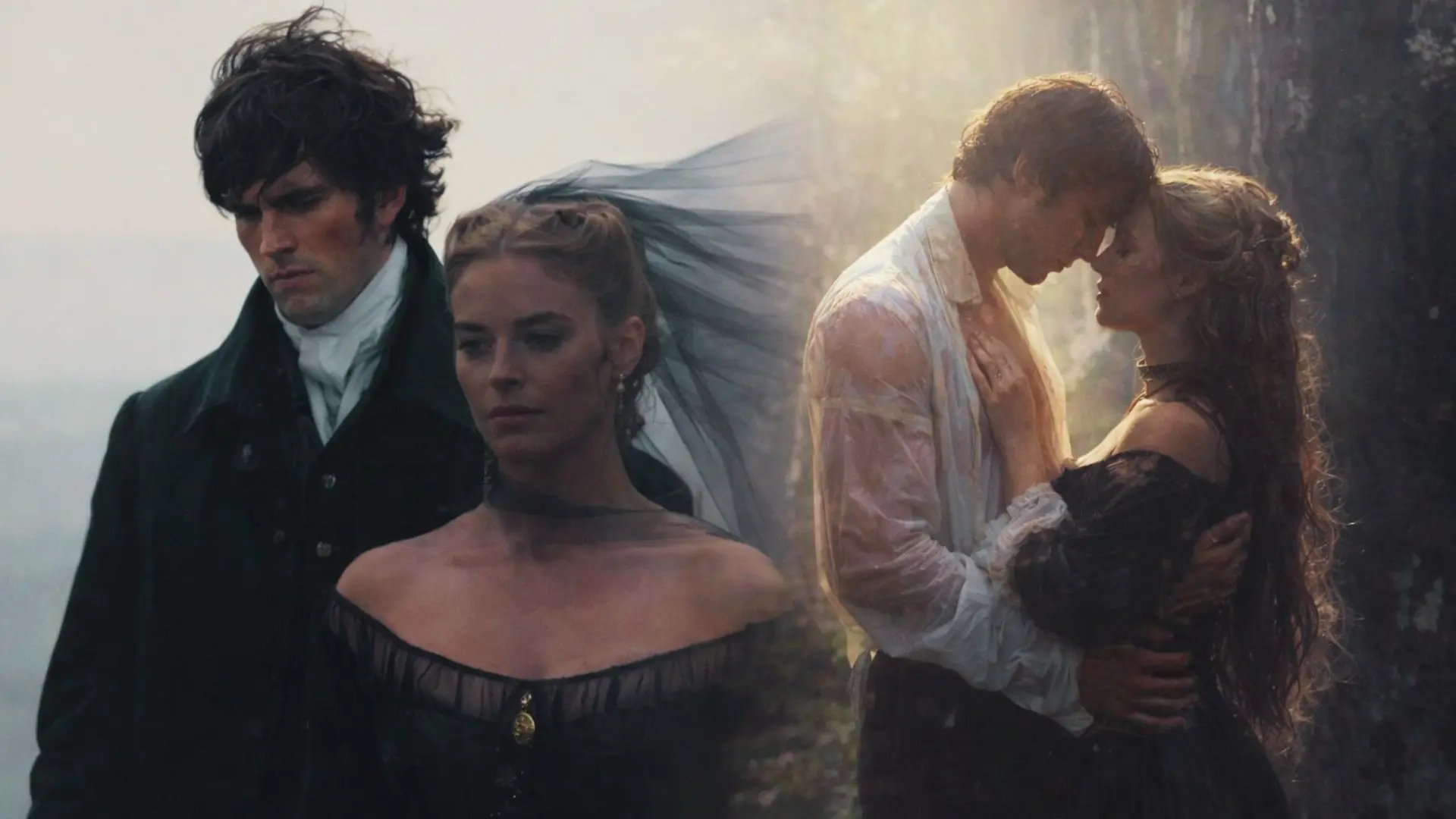
Wuthering Heights Movie Sparks Debate as the release of Emerald Fennell’s new Wuthering Heights ignites sharp disagreement among critics and audiences. Opening to strong turnout and lively discussion, the film has quickly become one of the most talked-about literary adaptations of the season. At the center of the controversy is whether the movie captures the unsettling power of Wuthering Heights or reshapes it into a glossy, modern spectacle designed to appeal to contemporary tastes.
Some reviewers argue that the adaptation smooths over the novel’s harsh moral landscape, while others praise its bold visual language and emotional intensity. The disagreement reflects a broader question about how far a filmmaker can reinterpret a classic without losing its core.
Wuthering Heights Movie Sparks Debate -Critics Argue the Novel’s Darkness Is Diluted
For many critics, the film’s central weakness lies in its treatment of love and morality. Brontë’s novel is not a romantic fantasy but a brutal exploration of obsession, cruelty, and emotional damage. In the book, love destroys as much as it binds. Reviewers suggest that the film leans away from this corrosive duality, presenting the central relationship as seductive and tragic rather than morally disturbing.
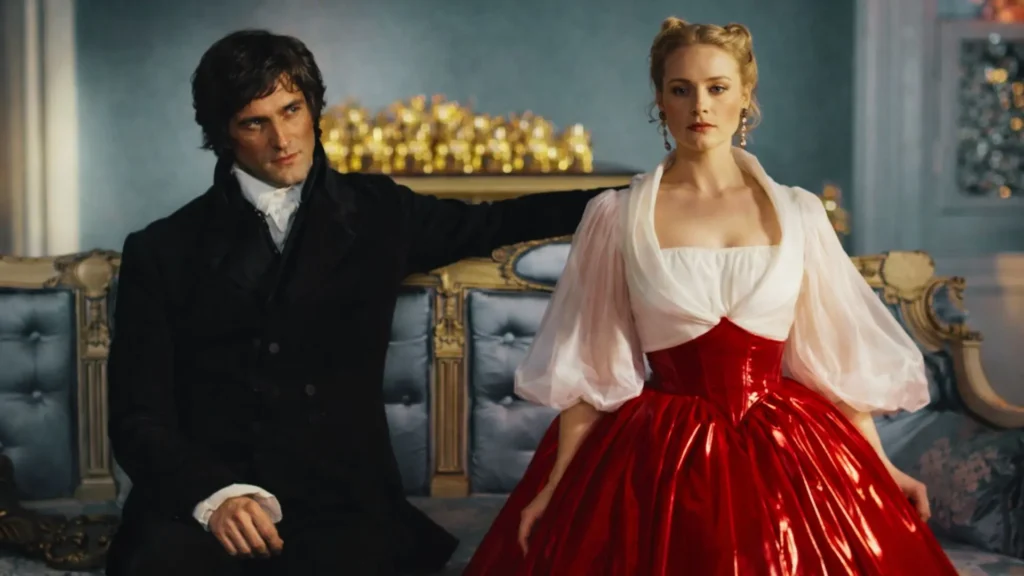
The narrative approach has also drawn criticism. The novel’s fragmented structure and layered narration create an unsettling sense of distance and ambiguity. By contrast, the film opts for immediacy and immersion, favoring atmosphere over complexity. Critics argue that this shift makes the story more accessible but less challenging, transforming a destabilizing work into a stylized romantic drama.
Visual Style and Sensuality Take Center Stage
Much of the debate focuses on the film’s striking visual design. Elaborate sets, expressive lighting, and detailed costumes emphasize texture, flesh, and ornament. Close-ups linger on bodies and emotions, creating a heightened sensual experience. Supporters see this as a deliberate artistic choice that reimagines the novel for a modern audience.
Detractors, however, argue that the emphasis on eroticism replaces psychological depth with surface-level provocation. They contend that when characters are framed primarily as desirable and glamorous, the emotional stakes diminish. The novel’s discomfort, they say, is replaced by aesthetic excess.
Audience Reactions and the Power of Star Casting
Audience responses have been more enthusiastic and varied. Many viewers have praised the film’s intensity, describing screenings as immersive and emotionally charged. The chemistry between the lead actors has been widely cited as a major strength, drawing crowds and fueling social media discussion.
The film’s soundtrack and pacing have also contributed to its appeal, giving the story a modern rhythm that resonates with younger audiences. For these viewers, the adaptation succeeds not by replicating the novel but by reinterpreting it through contemporary cinematic language.
Casting, Representation, and Lingering Concerns
Despite the excitement, casting choices have generated controversy. Heathcliff has long been one of literature’s most unsettling characters, marked by racial ambiguity and social otherness. Some commentators argue that this adaptation downplays those elements, softening a figure meant to disrupt social norms.
Read also – The Tony Blair Story Review: A Portrait Without Depth
There are also concerns about how the film handles themes of coercion and domestic abuse. Critics worry that reframing these dynamics through heightened sensuality risks obscuring their moral weight, turning deeply troubling behavior into stylized passion.
What This Debate Reveals About Adapting a Classic
Ultimately, the argument surrounding Wuthering Heights is about interpretation rather than accuracy. Brontë’s novel endures because it refuses comfort, presenting love as something feral, destructive, and beyond social order. Any adaptation must choose which aspects to emphasize and which to leave behind.
Read also – What Is Moviesda and Why Is It So Popular?
Fennell’s film clearly prioritizes emotion, spectacle, and sensuality. For some, this results in a bold and provocative reimagining. For others, it represents a softened echo of a famously uncompromising story. Either way, the controversy proves that Wuthering Heights remains as difficult and divisive as ever — and that its power to provoke debate is far from diminished.