
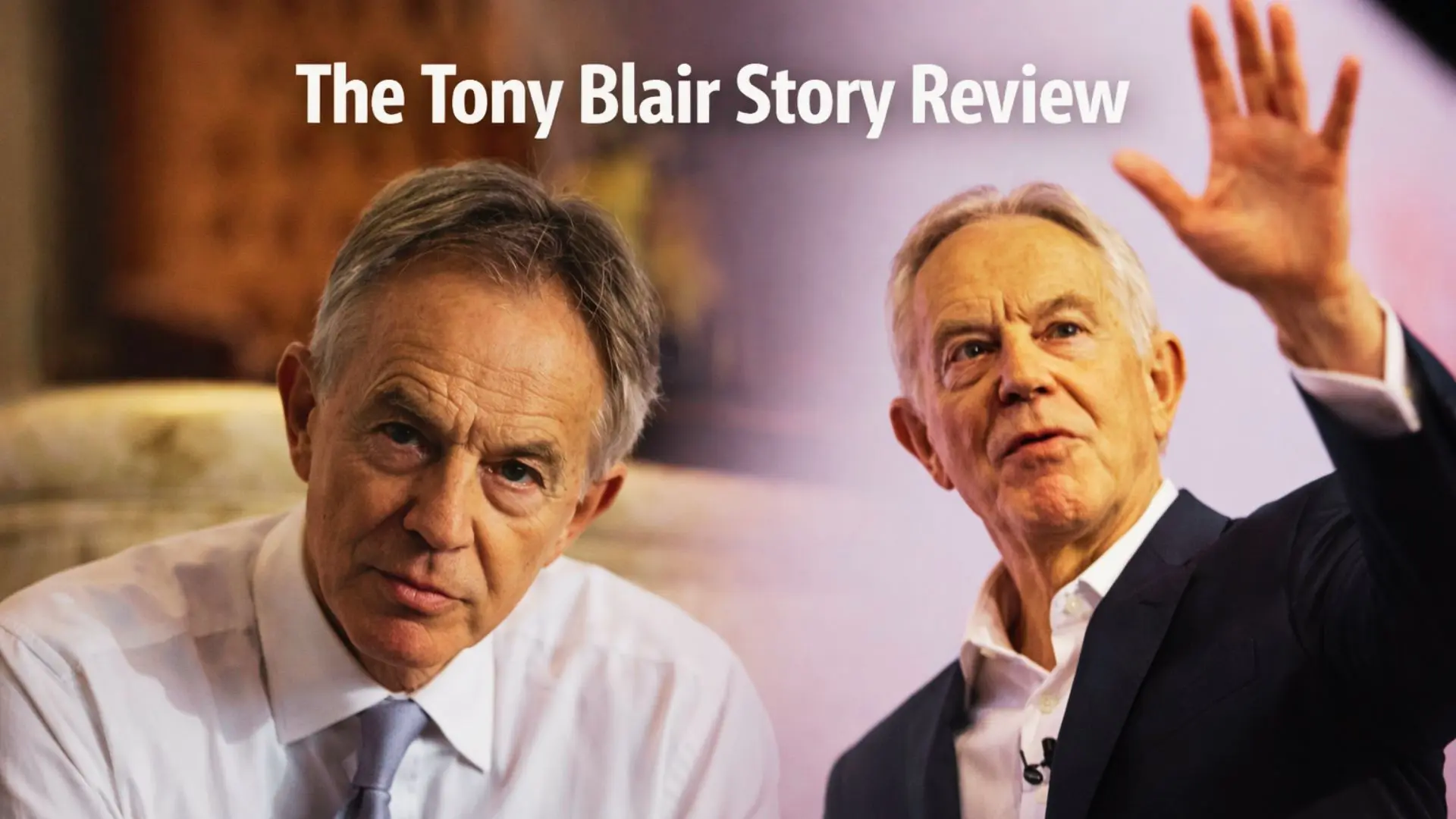
The Tony Blair Story Review – The three-part documentary centred on Tony Blair follows a clear and consistent aim: to get close to the man himself. Through extensive interviews with Blair and his family, familiar archival footage, and reflections from political allies and rivals, the series constructs an intimate character study. However, its strong focus on psychology and personal emotion comes at the cost of deeper reporting that might have examined how key decisions were made — and who ultimately benefited from them.
The Tony Blair Story Review -Close-Up Character Study
The opening hour traces Blair’s formative experiences: a privileged education that instilled resilience, years at Oxford shaped by personal loss, and a combative rise through Labour Party politics. Long interview segments and domestic family scenes allow viewers to observe the former prime minister shifting between practiced charm and moments of visible discomfort, particularly when he appears to forget the camera’s presence.
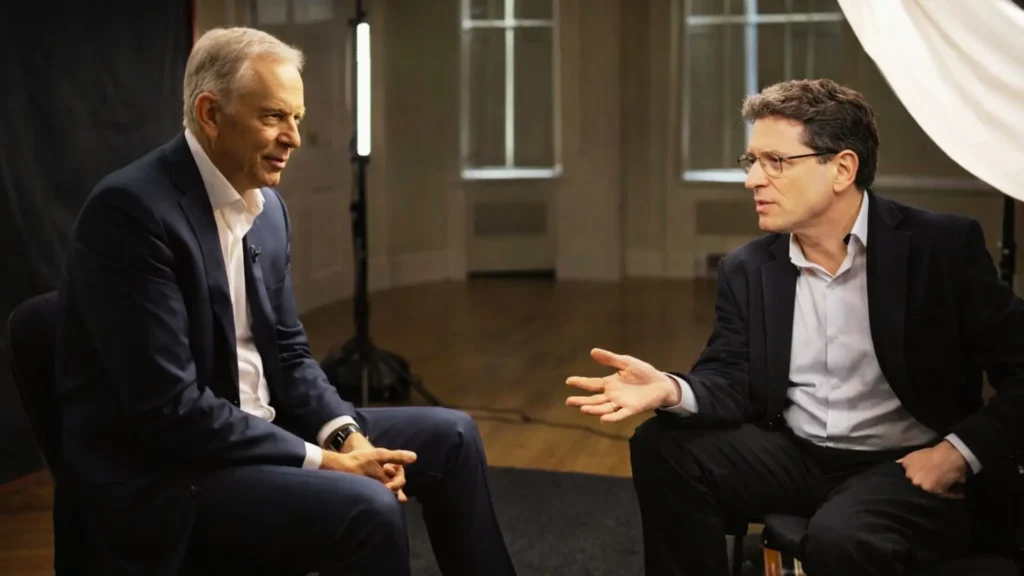
These moments, supported by commentary from close allies and selective critics, represent the documentary’s strongest material. They humanise a figure often flattened by history into a single narrative, offering warmth, vulnerability, and emotional complexity.
The filmmaker clearly privileges psychological explanation. Testimony and scenes revolve around temperament and motivation — Blair’s drive, the coexistence of ambition and idealism, and the influence of family on public life. For viewers interested in character over policy, this approach is effective, providing texture, anecdote, and insight into a politically and emotionally complicated figure.
What the Film Leaves Untouched
That same intimacy also defines the documentary’s limitations. The series largely avoids a sustained examination of power structures — the networks, financial relationships, and strategic alliances that underpin political success. While it briefly acknowledges party modernisation, leadership rivalries, and behind-the-scenes deal-making, these threads are never pursued with the same energy devoted to personality.
Read also – What Is Moviesda and Why Is It So Popular?
More consequential controversies receive similarly restrained treatment. The documentary acknowledges the most contentious aspects of Blair’s legacy and gives him space to explain his decisions, but it rarely moves beyond personal justification into institutional or geopolitical analysis. Questions surrounding fundraising, post-office earnings, and the blurred line between public service and private remuneration are raised, then quickly set aside.
For a political career so deeply intertwined with disputed policy outcomes, that restraint feels less like balance and more like avoidance.
Legacy, Limits, and Who Should Watch
The series will appeal most to viewers interested in the individual behind the headlines. It is at its best when it observes quietly — lingering on unguarded moments, family testimony, and emotional reflection. However, those expecting a rigorous reassessment of decisions that reshaped domestic politics and foreign policy may find the documentary lacking.
Read also – Tell Me Lies Season 3 Finale Explained : Does Lucy Choose Stephen After the Tape Leak?
Ultimately, the programme positions itself as an intimate portrait rather than an investigative reckoning. That choice is defensible, but not neutral. For a figure whose reputation remains deeply contested, a more forensic approach would have equipped viewers with stronger tools to judge legacy. As it stands, the series clarifies how Blair wishes to be remembered, without fully testing whether history supports that version.
Cast
- Tony Blair – Self
- Cherie Blair – Family interviews
- Euan Blair – Family interviews
- Former Labour Party colleagues – Contributors
- Political rivals and critics – Contributors