
Is Ryan Murphy finally back on form, or is The Beauty just another stylish provocation looking for meaning? That’s the question gaining traction as the 11-part series lands, following the critical collapse of All’s Fair and its widely derided reception.
Murphy’s previous project was savaged for its dialogue, tone and lack of purpose, earning a rare zero rating on Rotten Tomatoes and a no-star review elsewhere. Despite that, it was renewed. Against that backdrop, The Beauty arrives carrying unusually low expectations — and clears them with surprising ease.
Why does The Beauty feel different from Murphy’s recent work?
Unlike its predecessor, The Beauty has a coherent narrative, defined characters and a sense of direction. Scenes unfold with internal logic. Dialogue sounds closer to how people might actually speak. There’s even a measured awareness of the world it’s reflecting.
For viewers familiar with Murphy’s earlier high point — when The People v OJ Simpson, Feud and The Assassination of Gianni Versace arrived in quick succession — the shift is noticeable. That era reinvigorated performers including Sarah Paulson and Jessica Lange and suggested a creative run that might never end. The Beauty doesn’t fully reclaim that peak, but it gestures towards it.
What kind of show is The Beauty?
This is firmly body horror. Gore is not incidental; it’s structural. The series adapts the comic by Jeremy Haun and Jason A Hurley, centring on a sexually transmitted disease that transforms its carriers into physically flawless versions of themselves — before killing them in spectacular fashion.
The metaphor isn’t subtle. Beauty becomes lethal. Desire becomes contagious. Perfection burns from the inside out.
Why does the series open with Bella Hadid?
The first outbreak is announced through chaos. Bella Hadid appears on a catwalk, then off it, violently lashing out — attacking photographers, destroying restaurants, desperately searching for water to soothe an unquenchable thirst.
She’s only the beginning. Soon, headlines scream “Catwalk Carnage!” as models across the globe combust, collapse or incinerate, leaving behind charred remains dressed in couture. The imagery is blunt, excessive and intentionally confronting.
Who is investigating the outbreak — and why does it matter?
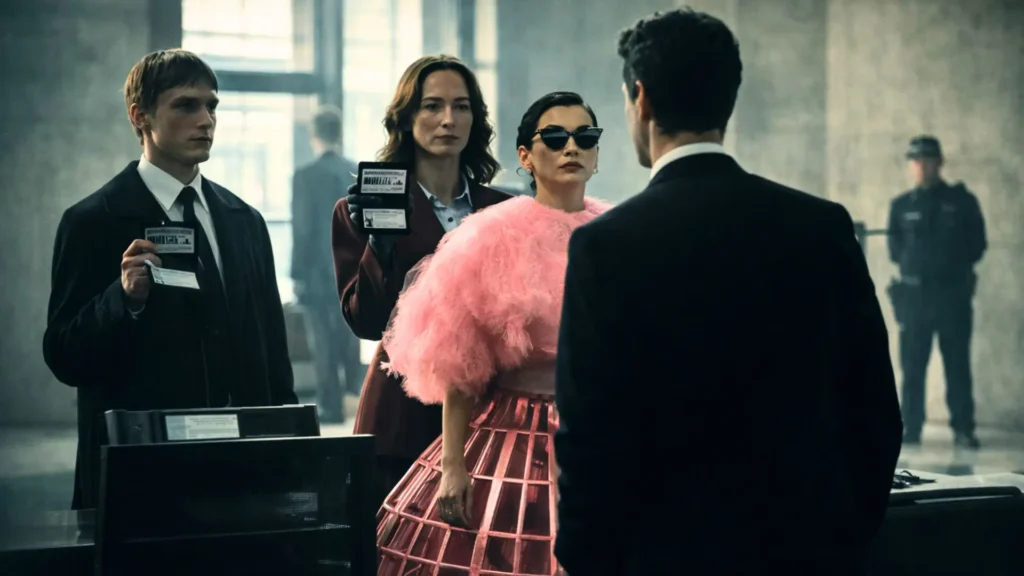
The chaos draws in FBI agents Jordan Bennett (Rebecca Hall) and Cooper Madsen (Evan Peters). They are partners, professionally and romantically, though both are committed to pretending their relationship is purely physical.
Jordan’s backstory quietly reinforces the show’s themes. She has recently had breast implants, a delayed response to childhood bullying that labelled her part of the “Itty-Bitty Titty Committee”. Even armed with authority, experience and a badge, she remains vulnerable to the same beauty standards driving the epidemic she’s investigating.
What role does Jeremy play in the story?
Social commentary sharpens through Jeremy (Jeremy Pope), introduced alone in a New Jersey basement that appears to belong to his mother, or possibly his late mother. Isolated and adrift, he seeks meaning after losing access to a camgirl he had relied on for connection.
Read also – Steal TV Series Review: What the High-Stakes Thriller Gets Right About Power and Money?
“I’m lost,” he tells a doctor. “I want a purpose. Do you think I should do standup?” The moment signals a tonal shift. The series relaxes, finding confidence in its absurdity.
The doctor, a plastic surgeon, offers a different solution. “You are an incel, Jeremy. I can make you a Chad.” Through Jeremy, the virus becomes personal, ideological and aspirational.
Who created the virus — and why can’t it be controlled?
The disease is the product of Byron Forst (Ashton Kutcher), a tech billionaire also known as the Corporation. His ambition: to remake America’s aesthetic ideal. He is assisted by the Assassin (Anthony Ramos), tasked with containing the consequences.
Read also – Percy Jackson Season 2 Finale Review : Why Fans Are Still Talking About the Ending ?
The irony is unavoidable. A beauty virus transmitted through sex proves impossible to manage. Control slips. The outbreak accelerates. The system overwhelms its creators.
Why does Isabella Rossellini’s appearance stand out?
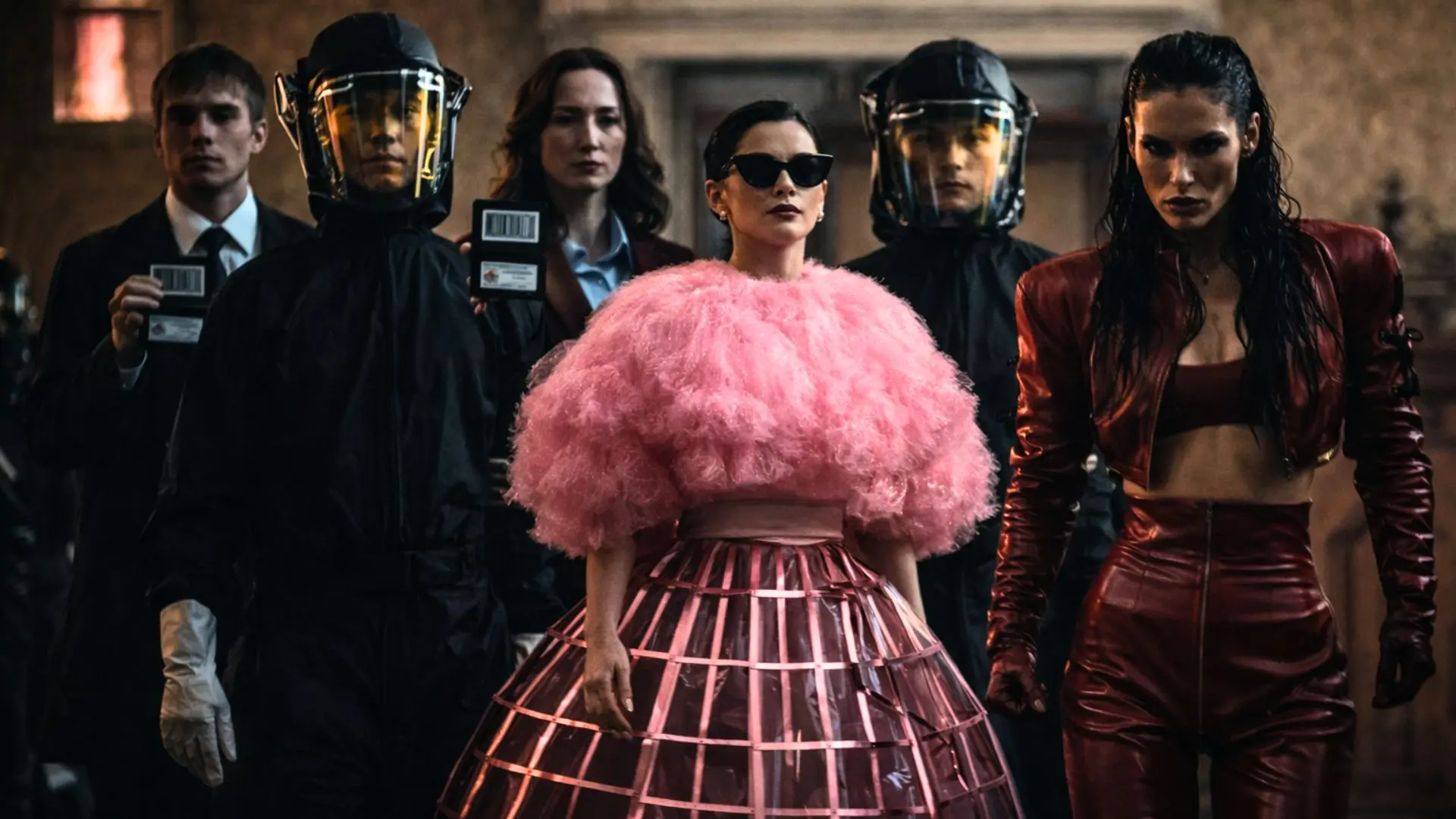
Isabella Rossellini enters as Franny Forst, dressed in extraordinary fashion and commanding immediate attention. Her connection to Byron is strongly implied. Their shared surname suggests a familial link, and the prospect of their scenes together carries its own charge.
Rossellini’s presence reinforces the show’s awareness of image, legacy and spectacle — themes embedded in every layer of the narrative.
Why does The Beauty matter right now?
At its core, The Beauty examines how obsession with appearance mutates into violence, how power commodifies desire, and how technology accelerates cultural damage. Its targets are familiar — unrealistic beauty standards, cosmetic enhancement, wellness culture — but the execution is more controlled than Murphy’s recent output.
The series recalls Nip/Tuck, arguably one of Murphy’s sharpest explorations of similar terrain, without simply repeating it.
Where does The Beauty ultimately land?
The Beauty isn’t flawless. Its ambition occasionally outpaces its restraint. But it is coherent, watchable and — crucially — engaged with what it’s trying to say.
Hovering between three and four stars, it earns goodwill less through brilliance than through relief. After recent misfires, Murphy has delivered something bingeable again. Not a reinvention, but a reminder of what he can do when excess is guided by intent.