
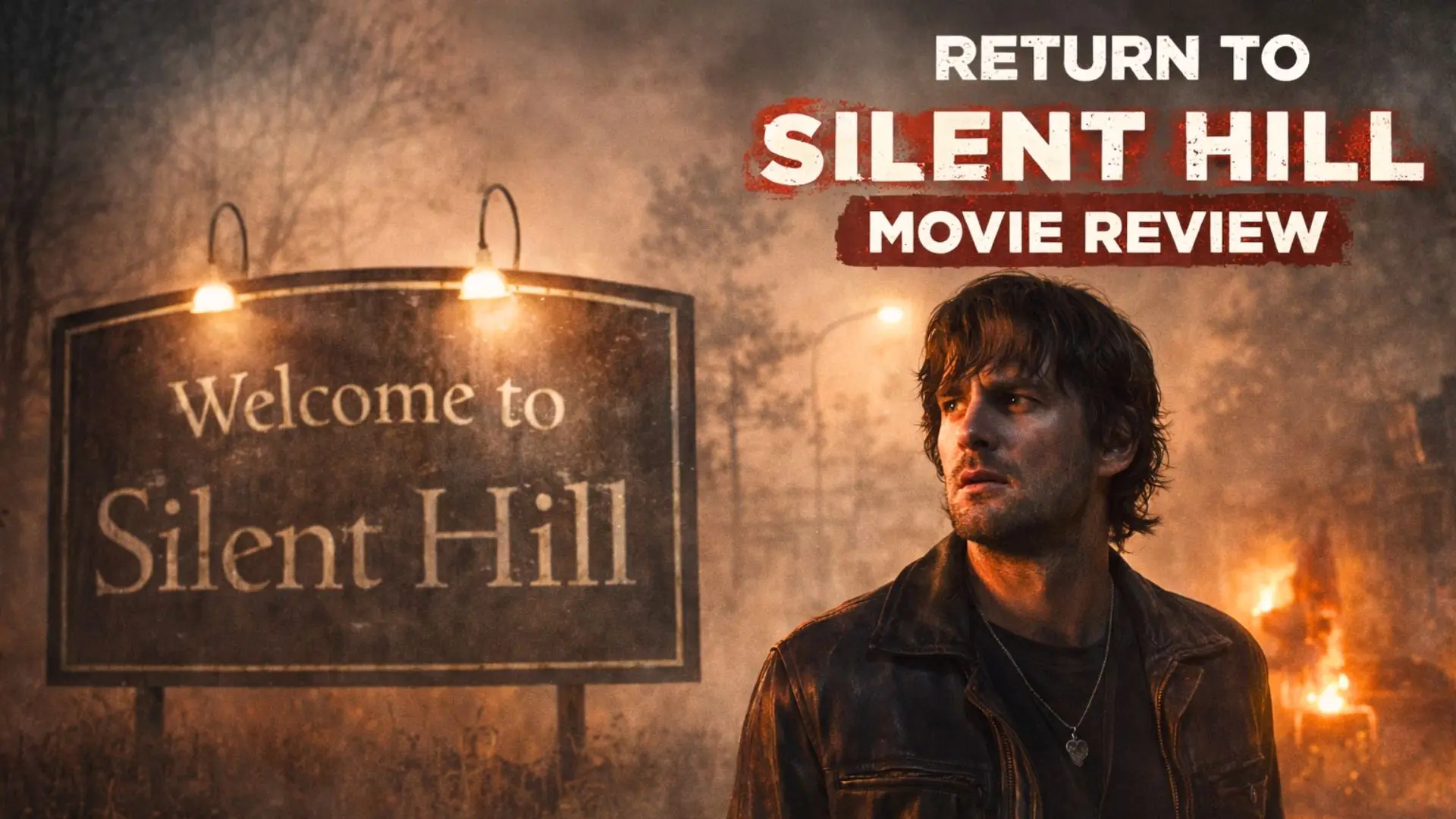
Is revisiting Silent Hill, the 2006 live-action video game adaptation, necessary before watching Return to Silent Hill, a sequel that draws from Silent Hill 2 but tells a separate story? The short answer is both yes and no, and the reasoning points back to the same place. Christophe Gans’s original film remains an effective, unsettling mood piece, and it still stands as the stronger expression of the series’ cinematic potential.
That staying power is why the earlier film is resurfacing in conversation now, as audiences look toward Gans’s return to the fog-choked town he first brought to the screen nearly two decades ago.
What still works about the 2006 Silent Hill?
The 2006 Silent Hill captures the appeal of its source material with clarity. The film follows Rose, played by Radha Mitchell, a distressed mother searching for her unwell adopted daughter in the abandoned town of Silent Hill. Gans approaches the material less as a conventional horror story and more as an exercise in atmosphere, leaning heavily on dread, disorientation, and visual unease.
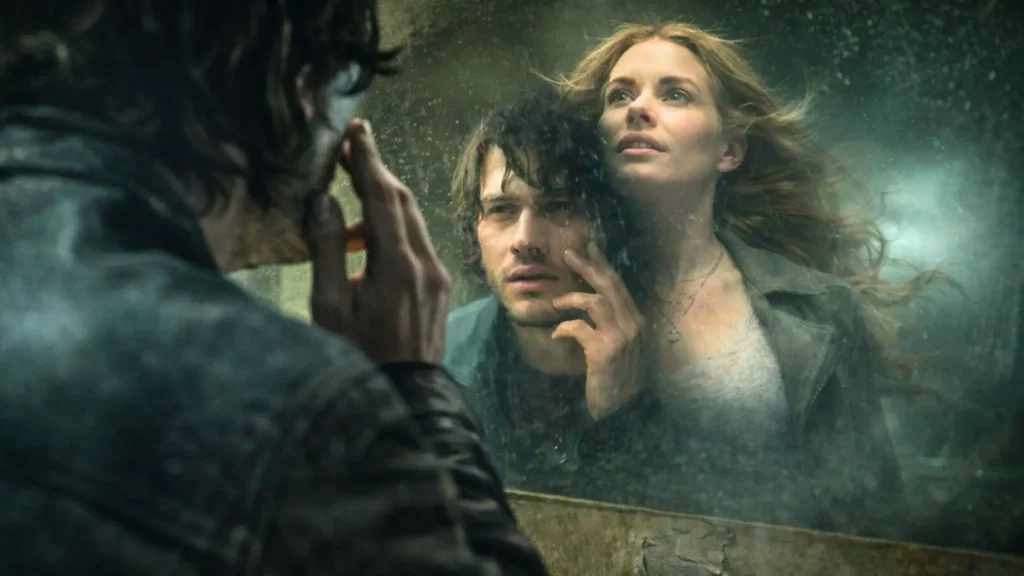
That approach has aged well. The film’s emphasis on tone over character psychology mirrors the structure of the Konami video games that inspired it. Dialogue is functional at best, often stiff or oddly ornate, but the film is not driven by conversation. Its power comes from images, sound, and the slow accumulation of menace.
How does Return to Silent Hill compare?
Return to Silent Hill, also directed by Gans, revisits many of the same aesthetic pleasures. This time, the story centres on James, portrayed by Jeremy Irvine, a troubled painter searching for his wife Mary, played by Hannah Emily Anderson. The narrative draws from Silent Hill 2 rather than the earlier film and does not intersect directly with Rose’s story.
While the film reproduces much of the oppressive mood that defined the 2006 release, its story often feels lighter and more familiar. The central mystery lacks the force that drove the earlier film, making the sequel feel more like a careful recreation than a fully realised evolution.
Why does the atmosphere matter more than the plot?
Both films rely on dream logic to establish their unsettling tone. Events unfold with little explanation, and scenes drift into one another with an intentional lack of clarity. This method prioritises sensation over narrative coherence, aligning closely with how the games operate.
As a result, viewers are unlikely to find the films engaging for their dialogue or character development. Instead, the focus remains on Silent Hill itself: its empty streets, corroded interiors, and decaying structures. In Return to Silent Hill, James’s journey through these environments is the primary draw, rather than the resolution of his personal story.
What role do secondary characters actually play?
As players of the video games will recognise, most secondary characters exist largely to reflect aspects of James’s inner state. They provide fragments of information about the town and its history, but they are not deeply developed.
This design carries over to the film. These figures function much like Non-Playable Characters, offering limited guidance before receding into the background. Early sequences in Return to Silent Hill even resemble the games’ cinematic interludes, with wide, elevated shots of the town serving as transitions rather than storytelling beats.
Is the sequel relying too heavily on familiarity?
Although James’s story does not cross over with the 2006 film, Return to Silent Hill contains numerous callbacks. Familiar elements reappear, including grotesque creatures, religious extremists obsessed with purity, and Pyramidhead, the imposing, silent figure who has become one of the franchise’s most recognisable images.
Read also – Ha-chan Shake Your Booty!’ Movie Review: Rinko Kikuchi Turns Grief Into a Dance-Floor Delight
These inclusions often feel like deliberate nods to long-time fans. While they reinforce the film’s connection to the broader Silent Hill mythology, they can also register as overextended fan service. The result is a film that feels faithful to Silent Hill 2 but less distinctive than Gans’s earlier work.
Does knowing the games change the experience?
For viewers familiar with the games, these repetitions may feel expected. The structure, pacing, and character functions closely resemble the original interactive experience. For newcomers, however, the reliance on recognisable motifs may feel repetitive or underexplained.
Read also – The Lord of the Rings Extended Trilogy Returns to Prague Cinemas for 25th Anniversary
One sequence in particular echoes the earlier film almost directly: a hospital corridor filled with faceless, impaired nurses wielding surgical tools. The moment reinforces the franchise’s visual identity, but it also highlights how closely the sequel mirrors what came before.
Why does this matter now?
The renewed attention on Silent Hill arrives as audiences reassess video game adaptations more critically. Gans’s 2006 film is often cited as an example of a game adaptation that understood its limitations and leaned into its strengths.
Return to Silent Hill reaches for the same goal. Gans once again prioritises environment over character, suggesting a clear understanding of what draws viewers into this world. The sequel largely delivers what it promises, even if it does not surpass its predecessor.
Should Australians revisit the original film?
The main criticism of Return to Silent Hill is not that it fails outright, but that it feels less fresh and less compelling than the 2006 film. That outcome is unlikely to surprise anyone who has followed the project’s long gestation.
Rewatching the original Silent Hill remains worthwhile, even for those uninterested in the sequel. It stands as a rare video game film that openly treats its characters as secondary to atmosphere and place. Return to Silent Hill offers more of the same approach, which will likely satisfy those already comfortable getting lost in the fog, but may leave others with a sense of déjà vu rather than discovery.