
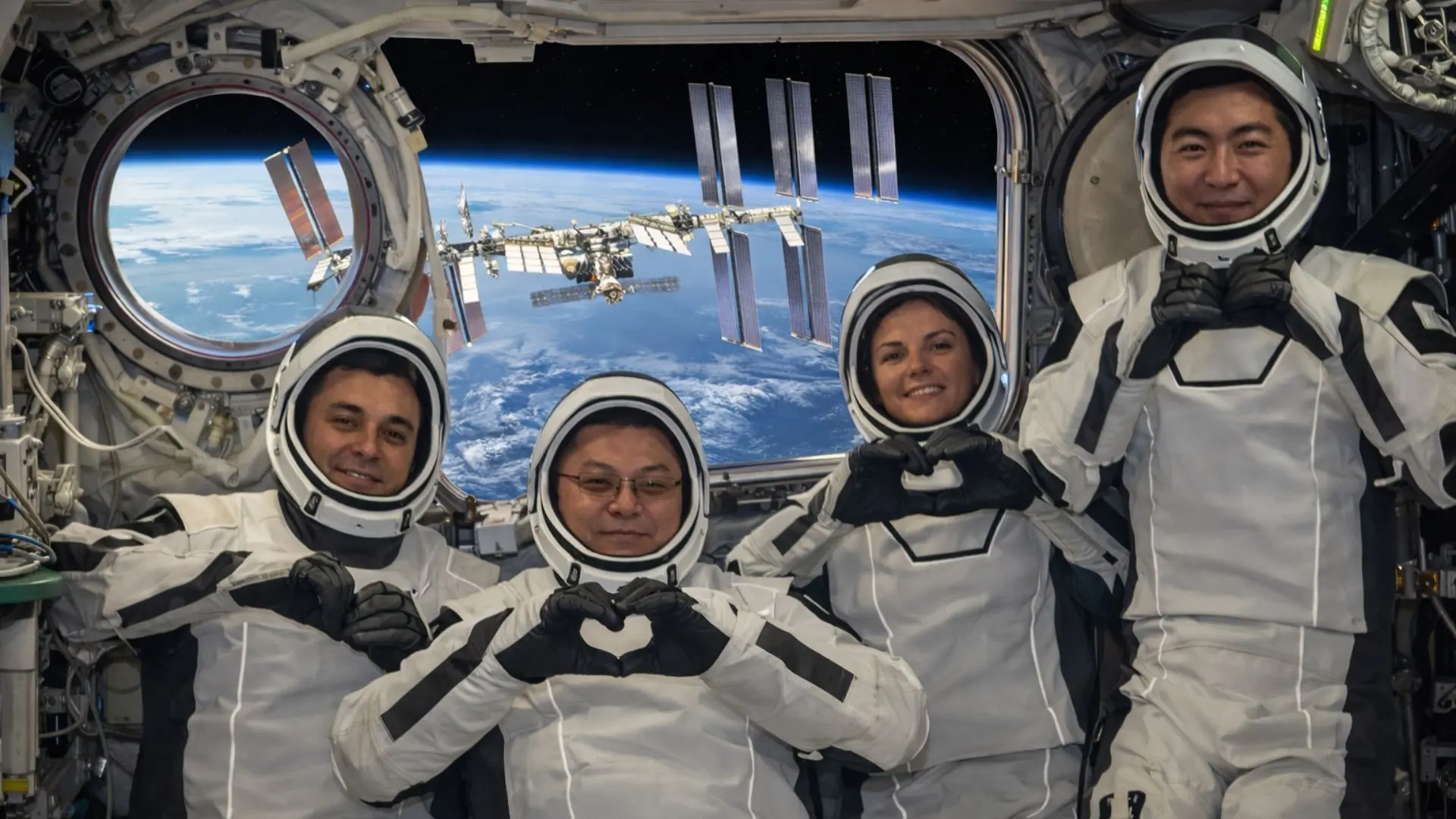
Astronauts train for years hoping they’ll never need their most extreme skills. But space is unforgiving, and when something goes wrong, there is no room for panic — only procedure.
That reality came sharply into focus on 15 January, when all four members of Crew-11 were forced to leave the International Space Station (ISS) and return to Earth earlier than planned. The reason: a medical emergency onboard that could not be treated with the station’s limited equipment.
The crew splashed down safely in the Pacific Ocean, but the incident was a stark reminder that even in low-Earth orbit, spaceflight is never routine.
A Routine Mission Cut Short
Crew-11 arrived at the ISS in August 2025, expecting a standard six-and-a-half-month mission.
The team included American astronauts Mike Fincke and Zena Cardman, Japan’s Kimiya Yui, and Russian cosmonaut Oleg Platonov. They travelled aboard a SpaceX capsule, which also served as their emergency lifeboat.
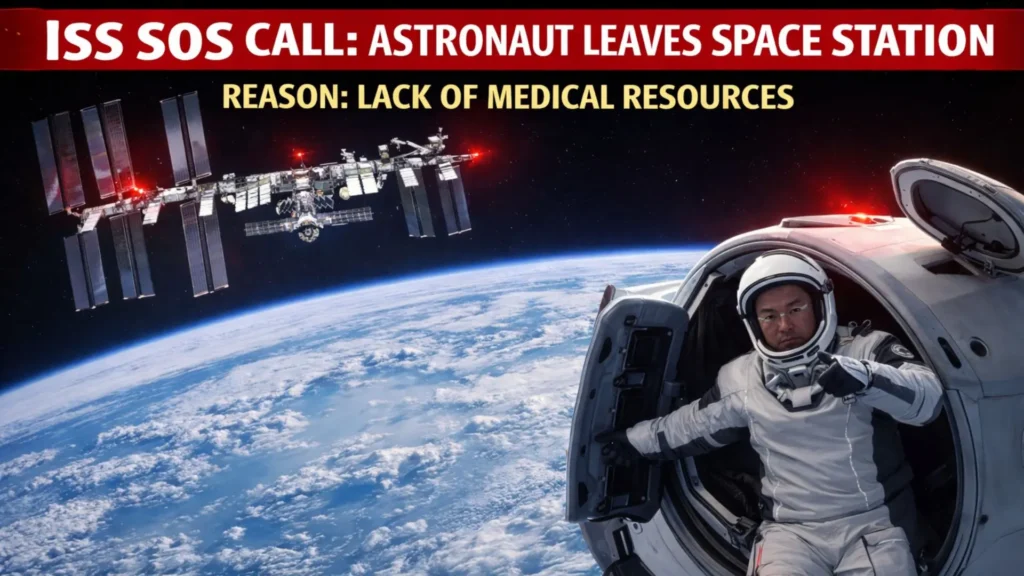
When one crew member — officials have not said who — suffered an unspecified medical emergency, the decision was made to evacuate. Because of how space missions are designed, that meant everyone had to come home together.
There is no option to send one astronaut back alone.
Space Is Never “Safe”
From the outside, the ISS can look like a well-run orbital workplace. Inside, it’s a tightly packed structure moving at 28,000 kilometres an hour, surrounded by debris, radiation and vacuum.
As a famous line from Star Trek puts it, space is “disease and danger, wrapped in darkness and silence”. Even today, that still holds true.
Astronauts are trained to wake to blaring alarms, smoke, toxic leaks or sudden loss of air pressure. These aren’t hypothetical drills — they’re repeated endlessly on Earth before anyone is cleared to fly.
Training for the Worst Day
Meganne Christian, senior exploration manager at the UK Space Agency and a reserve astronaut with the European Space Agency (ESA), says astronaut training is designed to overwhelm.
“They won’t tell you what’s coming,” she says. “It could be fires, ammonia leaks, multiple failures at once. You just have to deal with it.”
The goal isn’t speed — it’s judgement.
Astronaut candidates are heavily screened for how they cope under pressure. Psychologists test their ability to stay calm, adapt quickly and work as a team when everything feels like it’s going wrong at once.
For Australians watching from Earth, it’s not unlike emergency crews here responding to bushfires or floods — preparation, not heroics, is what saves lives.
The Lifeboat Rule
Every space station follows a basic rule: there must always be a spacecraft attached that can take the crew home at short notice.
Jonathan McDowell, an astrophysicist at the Harvard-Smithsonian Center for Astrophysics, describes it simply.
“You never call for a taxi,” he says. “You always have one parked and ready.”
That system worked for Crew-11. But it has limits.
If the rescue capsule itself is damaged, astronauts are stuck. That’s exactly what happened aboard China’s Tiangong space station in November 2025, when a fragment of space junk damaged a capsule window. Mission control had to rush a replacement vehicle into orbit.
Why Everyone Has to Leave Together
There’s another catch. If one astronaut becomes sick or injured, the entire crew assigned to that spacecraft must return.
“You can’t leave people behind without a way home,” McDowell says.
That’s why Crew-11’s evacuation involved all four astronauts, even though only one needed medical care. The return itself was calm and carefully managed over several days — but it raised an important question.
What if there wasn’t time?
When Every Minute Counts
Astronauts live by a counter-intuitive mantra: go slow to go fast.
Former astronaut Nicole Stott explains that rushing can make things worse. Alarms trigger a sequence drilled into muscle memory — locate the crew, put on respirators, isolate modules, and work through checklists together.
Within minutes, astronauts can retreat into their capsule, seal the hatch and assess what comes next.
“The escape capsule isn’t just an exit,” Christian says. “It’s your safe haven.”
From there, astronauts can either investigate the problem or leave orbit entirely.
The Moon and Mars Change Everything
In low-Earth orbit, crews can be back on the ground within hours. Beyond that, rescue timelines stretch dramatically.
From the Moon, a return trip takes three to four days. From Mars, it could be two years before another spacecraft arrives.
That distance forces a rethink.
“You have to accept more risk,” McDowell says. “You need serious medical capability — not just a first aid kit.”
The Crew-11 evacuation is likely to push agencies like NASA to reassess onboard medical systems for deep-space missions.
Lessons from Antarctica
Christian has already lived through something close to a Mars-like scenario during missions to Concordia, an isolated research station in Antarctica.
Read also – NASA Astronauts Space Station Evacuation: Crew Returns to Earth After Medical Emergency
During winter, evacuation is impossible. Crews rely on self-sufficiency, a small medical facility, and constant simulation training.
“If something went wrong, we had a second base we could retreat to,” she says. “But help from outside wasn’t coming.”
That experience mirrors the reality future astronauts will face.
The Growing Rescue Gap
With the ISS expected to be retired within five years, attention is turning to what comes next.
Grant Cates from The Aerospace Corporation’s Space Safety Institute has warned of a “space rescue capability gap”. His concern is simple: if a commercial spacecraft fails, there may be no backup.
“Do we actually have a way to rescue people if their spacecraft can’t get them home?” he asks.
Read also – The Rip story review – The Rip Delivers a Glossy Netflix Thriller With Affleck and Damon
Possible solutions include keeping standby spacecraft on Earth, universal docking systems, and even dedicated orbital rescue vehicles — the space equivalent of roadside assistance.
A New Era of Risk
The risks are about to increase.
NASA’s upcoming Artemis II mission will send astronauts beyond the Moon for the first time since 1972. It will fly with a single capsule and no spare waiting on the ground.
Read also – Retirees Now Spend 70% of Their Income on Essentials — What That Means for Your Budget
Once they leave Earth orbit, there is no evacuation plan.
If something goes wrong, it will be just the crew, mission control — and space itself.
For Australians following the next chapter of human spaceflight, Crew-11’s early return is a reminder that exploration still carries real danger. Preparation, not optimism, is what keeps astronauts alive.