
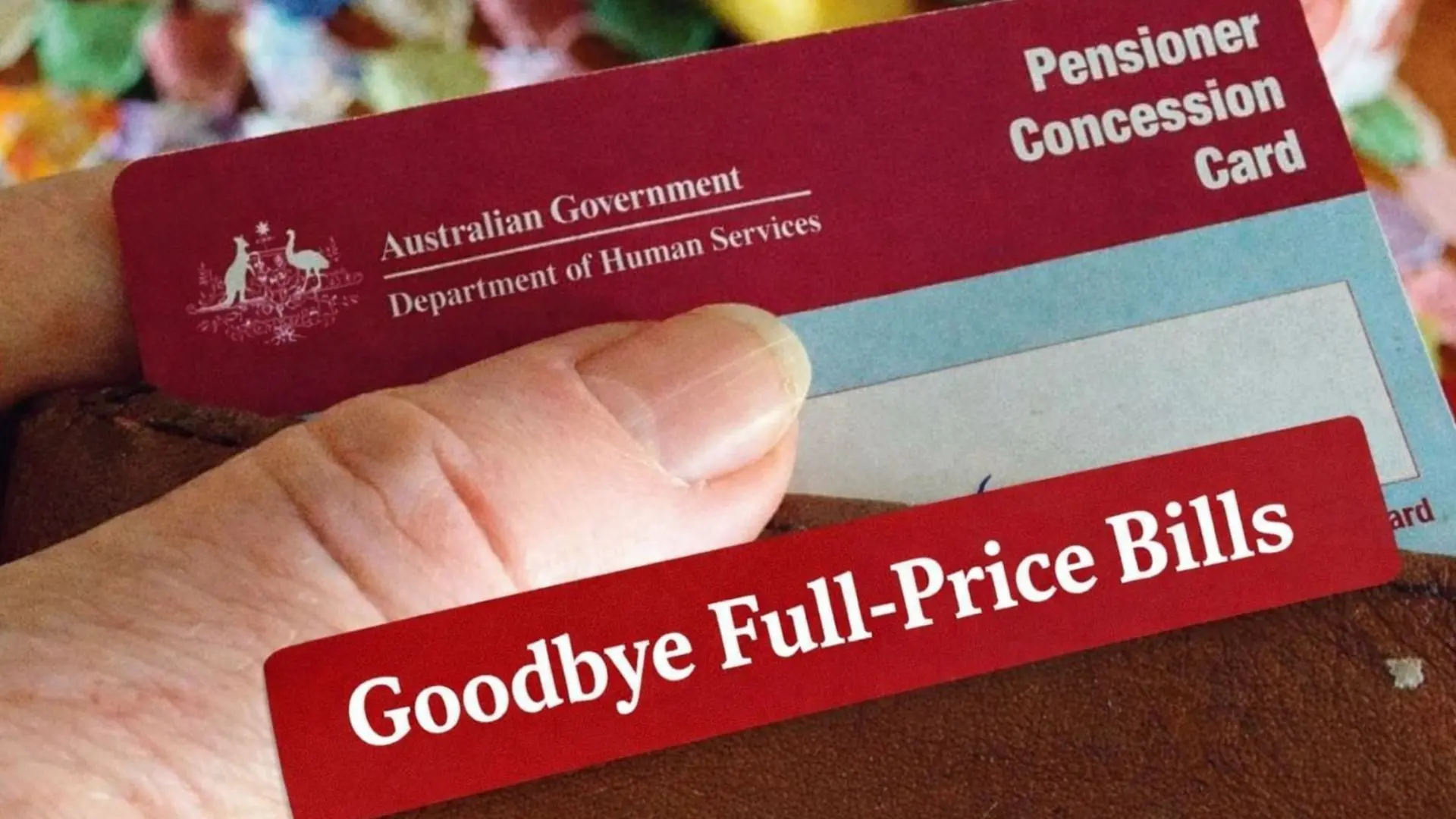
Goodbye Full-Price Bills: Are you still paying full price for medicines, power, or transport when others aren’t? As cost-of-living pressures remain high in 2026, Australians are again looking closely at how the Pensioner Concession Card is quietly reducing everyday bills for millions of households.
Although the card has existed for years, its impact has become more noticeable as prices rise faster than fixed incomes, making concessions more important than ever.
What is the Pensioner Concession Card and why does it matter?
The Pensioner Concession Card is issued by Services Australia to eligible people receiving specific income support payments. Rather than providing direct cash, the card unlocks ongoing discounts across essential services such as healthcare, utilities, transport, and council charges.

Its value comes from repeated savings. Each discounted bill or reduced fee helps pensioners stretch limited budgets further, often across the entire year.
For many Australians living on pensions, the card is one of the most effective tools for managing everyday costs.
Why does the card feel more valuable in 2026?
In 2026, the Pensioner Concession Card continues to sit at the centre of Australia’s support framework for older Australians and people with disabilities.
Several factors have increased its real-world importance. Prices for essentials have continued to climb, while pensions remain fixed. At the same time, more state, local, and private providers are recognising the card, particularly for energy, healthcare, and transport concessions.
Eligible Centrelink recipients still receive the card automatically, ensuring access without additional applications. While the federal government issues the PCC, many of the largest savings depend on state and council-level programs, which vary by location.
Who can receive a Pensioner Concession Card in 2026?
Eligibility in 2026 is tied to specific Centrelink payments. Australians may qualify if they receive the Age Pension, Disability Support Pension, Carer Payment, or, in some cases, the Parenting Payment (single).
In most situations, the card is issued automatically once the underlying payment is approved. There is usually no separate application process.
The PCC should not be confused with the Commonwealth Seniors Health Card, which operates under different eligibility rules and offers a separate set of benefits.
How does the card reduce healthcare costs?
Healthcare remains one of the areas where the Pensioner Concession Card delivers its most immediate savings.
What happens to medicine prices?
Cardholders pay the lowest Pharmaceutical Benefits Scheme co-payment rate in 2026, which remains significantly cheaper than the standard price paid by general patients.
For pensioners taking multiple prescriptions, the difference can amount to hundreds of dollars over a year. Once the PBS Safety Net is reached, many medicines may cost much less or nothing for the remainder of the calendar year.
Can the card lower medical and allied health fees?
Many healthcare providers recognise the PCC, even though concessions are not mandatory. This often includes bulk-billed GP visits, reduced specialist fees, cheaper pathology and imaging services, and lower costs for allied health care such as physiotherapy, podiatry, and mental health support.
Read also – Goodbye to Low Pension Payments: What the New Age Pension Rates Mean From 1 February 2026
Availability depends on the provider, but the card often encourages discussions that lead to reduced fees.
Why are utility discounts so significant right now?
With energy costs still a major concern in 2026, utility concessions linked to the Pensioner Concession Card have taken on greater importance.
How do energy concessions work?
Most states offer ongoing electricity and gas discounts for PCC holders, along with seasonal or annual rebates. Some regions also provide extra assistance during extreme weather periods.
Read also – Australia Age Pension and Government Benefits: What Retirees Need to Know ?
In many cases, concessions apply automatically once the card is registered with the energy provider, though some households must opt in.
What savings apply to water and sewerage?
Water authorities commonly provide reduced usage charges, lower sewerage fees, and relief from certain fixed service costs for PCC holders. These reductions can make quarterly bills far more manageable.
How does the card support transport access?
Transport concessions help pensioners stay connected to work, services, and family.
What public transport discounts are available?
Across most states and territories, PCC holders receive free or heavily discounted off-peak travel, along with reduced fares on buses, trains, trams, and ferries. Some regions also offer special senior travel passes.
Are there savings for drivers?
Depending on the state, the card may also reduce vehicle registration costs, lower driver’s licence renewal fees, or remove certain transport charges. These benefits are particularly important for regional and rural Australians who rely on cars.
Read also –Retirees Now Spend 70% of Their Income on Essentials — What That Means for Your Budget
What local council concessions are people missing?
Local government benefits are among the least recognised PCC advantages. Councils may offer reduced rates, cheaper waste services, lower planning fees, and discounted or free access to community facilities.
Because these concessions vary widely, checking directly with the local council often reveals savings that are not automatically applied.
What do real Australians say about the impact?
Dorothy, 74, an Age Pensioner living in suburban Melbourne, tracks her expenses carefully.
“When I added it up, the concession card saved me well over $1,200 last year,” she said. “Power, medicines, transport — it all adds up.”
In regional Queensland, Disability Support Pension recipient Michael says transport discounts changed his daily life.
“I couldn’t afford regular travel before,” he explained. “Now I can get to appointments and see family without stressing about the cost.”
What is the government’s position on the card?
A Services Australia representative said the Pensioner Concession Card remains one of the most effective non-cash support measures available.
“The card is designed to provide ongoing relief from essential costs,” the spokesperson said. “It helps pensioners manage rising prices while maintaining access to vital services.”
Why do experts say concessions matter more now?
Economists and social policy specialists continue to point out that inflation hits fixed-income households hardest.
“Pensioners spend a higher proportion of their income on essentials,” said a social policy analyst. “Concession cards help target support where it’s most needed, without complex applications.”
Community organisations report that access to concessions can reduce financial stress and lower reliance on emergency relief services.
What doesn’t the Pensioner Concession Card cover?
Despite its reach, the card has limits. It does not apply to private health insurance premiums, private rent, general retail shopping, or travel outside Australia. Understanding these boundaries helps cardholders plan realistically.
How can Australians make sure they’re not missing out?
Many pensioners receive less than the full benefit simply because concessions are not activated. Registering the card with utility providers, asking service providers directly about discounts, checking state and council websites, and keeping card details current can unlock ongoing savings.
In some cases, a single phone call can make a measurable difference to the household budget.