
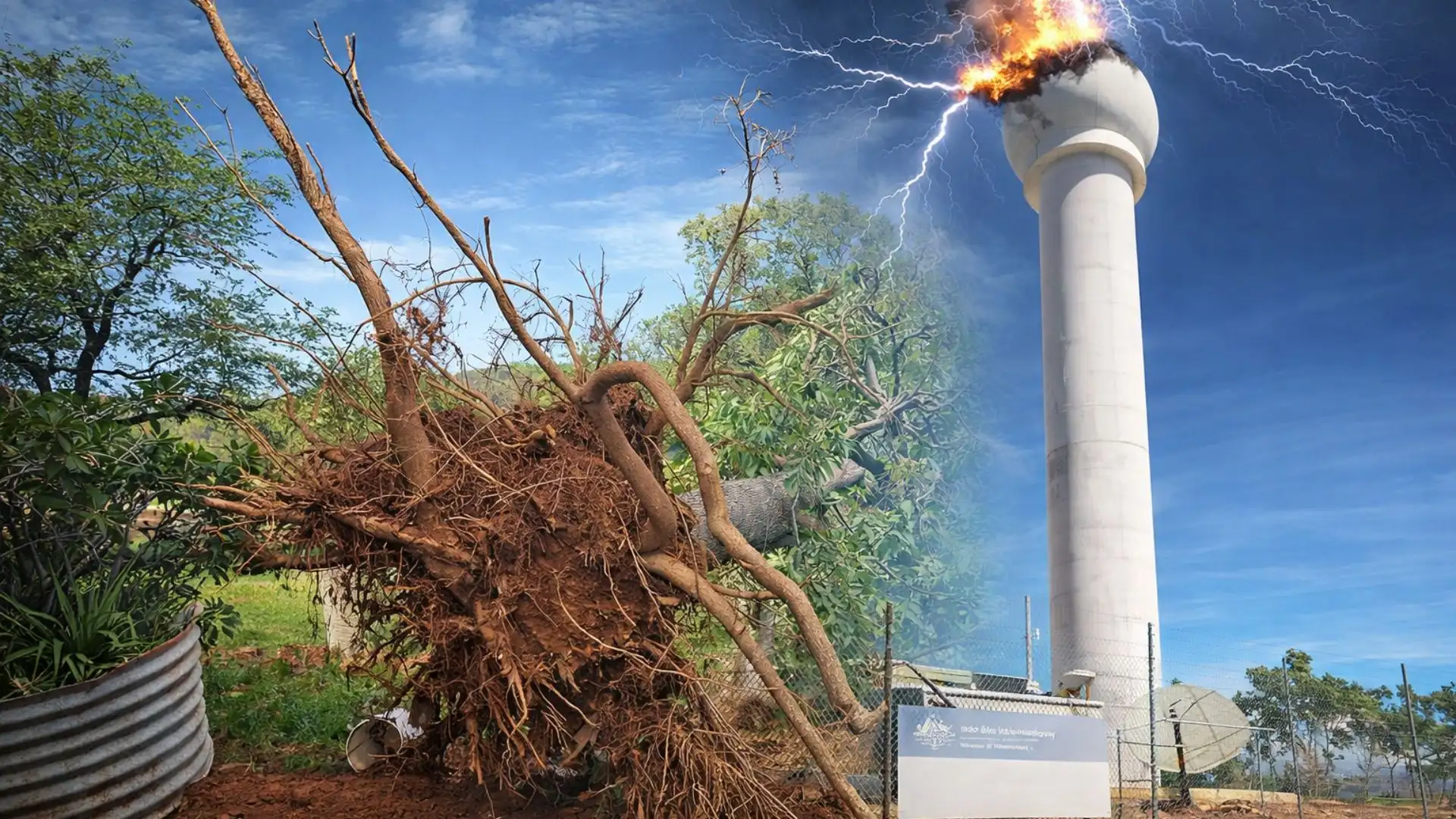
Farmers and pastoralists across northern Western Australia are entering one of the most critical periods of the year without a vital forecasting tool, after a major Bureau of Meteorology weather radar was knocked offline by a lightning strike.
The outage, which is expected to last at least three months, has left large parts of the Kimberley without real-time radar coverage just as the wet season shapes planting, spraying and safety decisions across the region.
Radar blackout stretches across the Kimberley
The Bureau of Meteorology (BOM) has confirmed there is currently no operational radar coverage for the north-east Kimberley, affecting communities and agricultural areas including Wyndham, Kununurra, Lake Argyle and the lower Ord River.
The affected region sits roughly 3,000 kilometres from Perth and supports a mix of broadacre farming, horticulture and pastoral operations. For many producers, the Wyndham radar plays a central role in day-to-day planning during the wet season.
Without it, growers and station managers say they are operating with less certainty at a time when timing can mean the difference between a successful season and costly losses.
Lightning strike triggered internal fire
BOM meteorologist Jessica Lingard said the outage was caused by a lightning strike on Christmas Day, which led to far more serious damage than first anticipated.
“In many cases, lightning damage is relatively straightforward to repair,” she said. “However, in this instance, the strike also caused an internal fire within the radar.”
The fire resulted in significant internal damage, meaning repairs will take considerably longer than a standard outage.
“Unfortunately, that level of damage means the radar won’t be back online for quite some time,” Ms Lingard said.
Wet season timing heightens the impact
Weather radar plays a critical role in tracking storms and forecasting severe weather, particularly during the Kimberley wet season, which typically runs from November through to April.
With the outage expected to last for months, there are growing concerns the radar may not be restored until after the most intense part of the season has passed.
For farmers, that timing is especially problematic. Wet season rainfall narrows planting windows and increases the risks associated with fertilising and spraying, making accurate storm tracking essential.
Farmers forced to make high-stakes calls blind
At Ceres Farm in Kununurra, farmer Matt Gray said the radar is usually checked repeatedly throughout the day during the wet season.
“We’d normally be looking at it at least 10 times a day,” he said.
Those checks guide decisions on planting, chemical spraying and fertiliser application — activities that can quickly become expensive mistakes if rain arrives unexpectedly.
“During the wet season, there are very limited opportunities to plant,” Mr Gray said. “Knowing where storms are, how fast they’re moving and how far away they are plays a critical role in making the most of those opportunities.”
Without the radar, he said it was still too early to quantify the financial impact, but the risk to operations was clear.
Safety concerns on remote stations
The effects of the outage extend beyond cropping decisions. About 40 kilometres south of Wyndham, Digger’s Rest Station operates as both a cattle property and a tourism business offering accommodation, horse riding and camping.
Read aslso- Greenland Crisis: European Troops Deploy as Trump Renews US Claim
Owner Alida Woodland said the lack of radar coverage has increased both operational and safety risks on the remote property.
“Just a couple of days ago, we had a really powerful storm come through and we had no sense it was coming,” she said.
The storm arrived suddenly, damaging trees across paddocks and around homes.
“A bit of warning would have made a big difference,” Ms Woodland said.
She added that even routine work such as weed spraying has become more challenging, with the risk of chemicals being washed away by unexpected rain adding to costs.
“We’ll manage and we’ll get through it,” she said. “But it’s a major inconvenience and it does raise safety concerns.”
Outage felt across the border
The disruption is not confined to Western Australia. Waterloo Station in the Northern Territory sits around 245 kilometres from Wyndham and falls just inside the usual coverage area of the radar.
Read aslso- New UK Passport Rules Leave Australians Facing Missed Family Moments and Cancelled Trips
Station owner and manager Hamish Brett said he relies heavily on radar data, particularly when assessing whether it is safe to cross flooded rivers during the wet season.
“If you can’t see where the rain is, it becomes very difficult,” he said. “It really highlights how dependent you are on these systems working properly.”
Mr Brett expressed frustration at the lack of redundancy in remote areas.
“People feel let down,” he said. “You wonder why there isn’t backup equipment in places like Katherine or Kununurra so repairs can happen faster when something goes wrong.”
BOM assessing damage, alternatives recommended
The Bureau of Meteorology says it is continuing to assess the full extent of the damage to the Wyndham radar.
Ms Lingard acknowledged the disruption the outage has caused for farmers, pastoralists and remote communities.
Read also- ISS SOS call; astronaut leaves space station, Reason: lack of medical resources
“We absolutely understand how challenging this is for people who rely on the radar every day,” she said.
In the meantime, BOM is advising users to rely on surrounding radar sites, including Halls Creek, Broome and Darwin, as well as satellite imagery available through the bureau’s website.
Read also- The Rip story review – The Rip Delivers a Glossy Netflix Thriller With Affleck and Damon
While those tools can help fill some gaps, producers say they are no substitute for local, real-time radar during one of northern Australia’s most unpredictable seasons.
As the wet season continues, the pressure is mounting on those making high-stakes decisions with fewer eyes on the sky — and little room for error.