
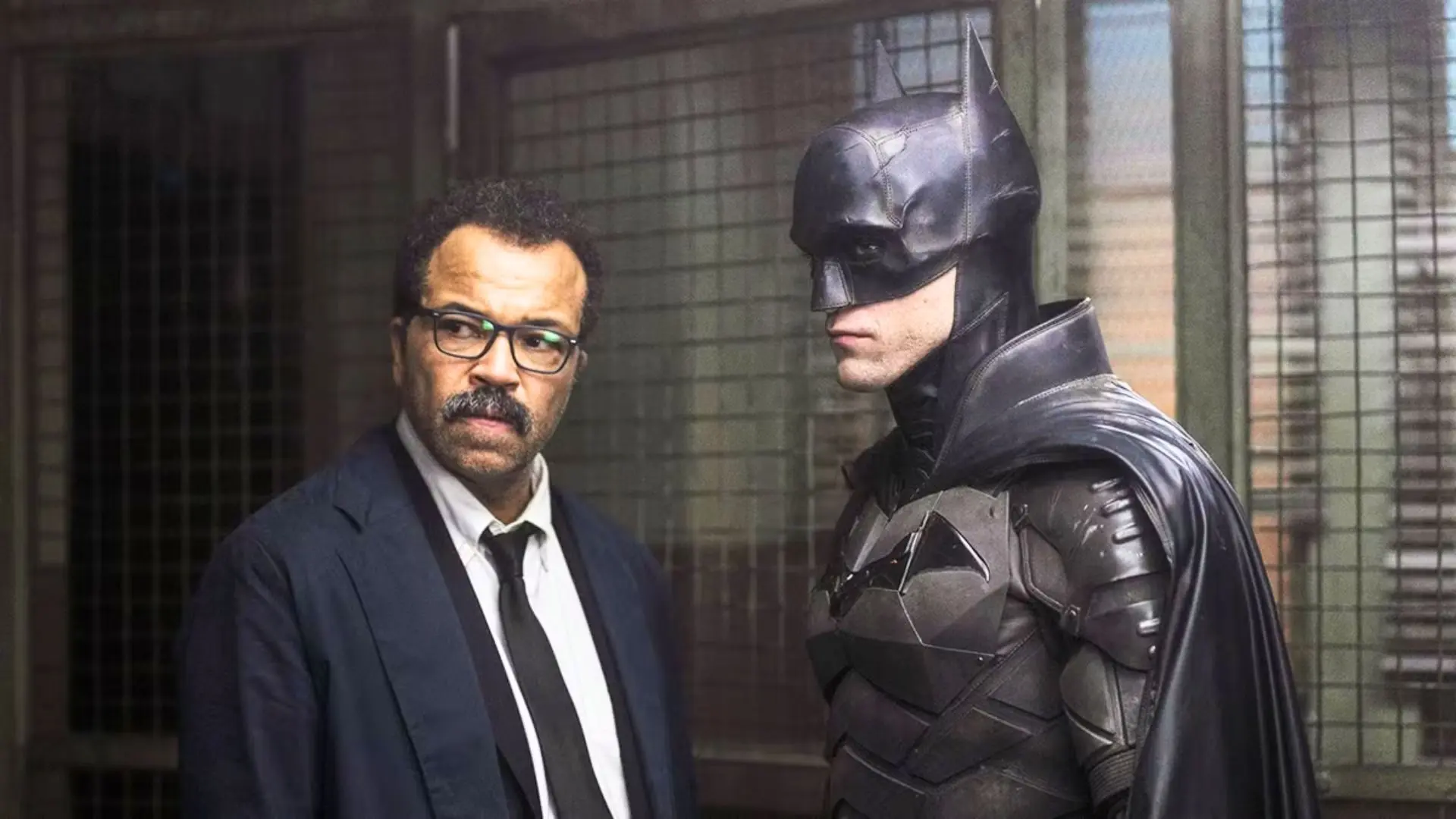
When Harvey Dent walks into Gotham City, history tells us one thing: nothing stays intact for long.
Across decades of Batman films, the character later known as Two-Face has rarely arrived without leaving permanent damage behind. Each version has acted as a warning sign — not just for Gotham, but for the fragile idea of justice itself. From neon excess to tragic idealism, Dent has always been less about spectacle and more about what happens when faith in the system collapses.
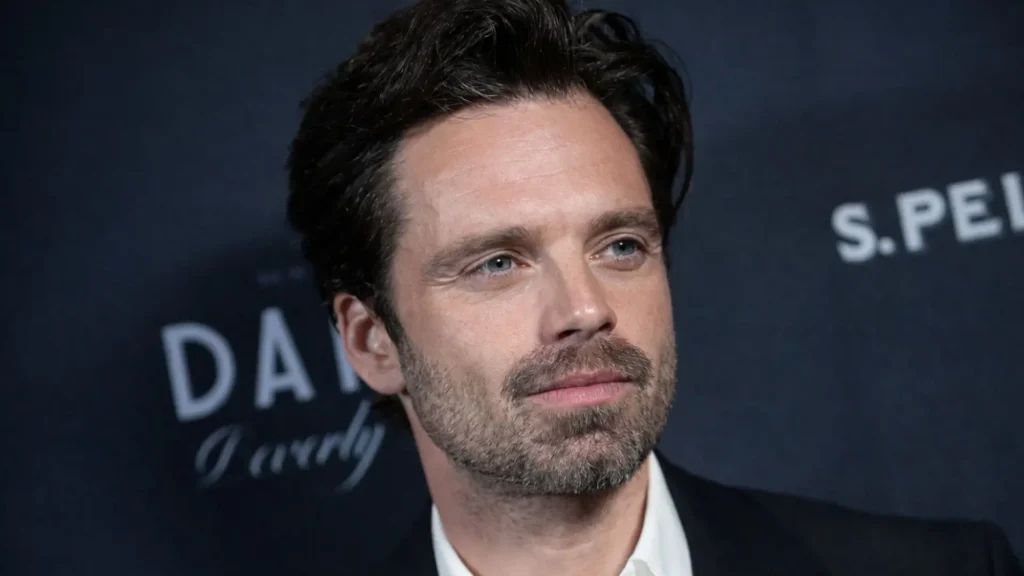
That is why this week’s carefully worded report from The Hollywood Reporter, confirming Sebastian Stan as Harvey Dent in Matt Reeves’ upcoming sequel to The Batman, feels quietly significant. It suggests a story less interested in comic-book theatrics and more focused on something colder and far more unsettling: the slow failure of moral certainty.
Two-Face Has Always Been a Mirror, Not a Monster
On screen, Harvey Dent has taken many forms, but the outcome is always the same.
Tommy Lee Jones’ version in Batman Forever leaned hard into excess — a loud, chaotic performance that treated Dent’s fractured psyche like a slot machine endlessly pulling its own lever. At the other end of the scale, Billy Dee Williams’ Dent in Tim Burton’s 1989 Batman barely had time to fall, serving instead as a promise of destruction yet to come.
Then came Christopher Nolan’s The Dark Knight, where Aaron Eckhart’s district attorney embodied Gotham’s last, best hope. His collapse was devastating precisely because it wasn’t random. It exposed the danger of investing too much belief in one person’s moral strength — especially in a city already struggling to define what justice even means.
For Australian audiences familiar with Nolan’s grounded realism, that portrayal remains a high-water mark. But it may not be the version Reeves is interested in revisiting.
A Gotham That Rots Quietly From Within
Reeves’ Gotham, first seen in The Batman, is not a carnival of villains competing for attention. It is a city decaying politely, its corruption woven into the wallpaper.
Casting Sebastian Stan fits neatly into that vision. Stan has built a career playing men whose ethics erode slowly, almost imperceptibly — characters who convince themselves they are still doing the right thing long after they have crossed the line. That quality makes him a natural fit for a Dent who doesn’t explode into villainy, but seeps into it.
This Gotham doesn’t demand scenery-chewing madness. It rewards restraint. In that world, it’s hard to imagine a Two-Face driven by operatic excess. A quieter, more reasoned descent feels far more likely — and far more disturbing.
Moving Beyond the Nolan Blueprint
Nolan’s films leaned heavily on symbolism and grand moral experiments, often staging ethical dilemmas at a near-mythic scale. That approach produced some of the genre’s most memorable moments, and Eckhart’s performance remains one of the strongest in any comic book adaptation.
Yet something was arguably lost in how his transformation was framed. Grief triggered the change, pushing Dent into villainy through emotional trauma rather than logic. In doing so, the films stepped away from one of the character’s most unsettling traits.
At his best, Harvey Dent does not “snap.” He reasons.
In the strongest comic stories — and in the much-loved 1990s Batman: The Animated Series — Dent talks himself into becoming Two-Face. Step by step, he decides the law no longer works. He convinces himself that only he is capable of replacing it. His infamous coin becomes a prop, a broken symbol he still pretends represents fairness and due process.
This is not chaos disguised as madness, as with the Joker. It is justice stripped of empathy, clinging desperately to the illusion of balance.
Why Two-Face Makes Batman’s Mission Feel Hopeless
In a city as violently decayed as Gotham, Dent’s fall feels almost inevitable. His presence doesn’t just create a new villain — it confirms how impossible Batman’s task truly is.
For Robert Pattinson’s brooding Dark Knight, this version of Two-Face could act as a constant reminder that right and wrong are no longer easy to tell apart. From a distance, doing the right thing and doing the wrong thing may look exactly the same.
Read also –Landman Will Return for Season 3 — Details So Far
There is even narrative space for Dent to linger. Rather than burning bright and disappearing, this Two-Face could hang over Gotham for multiple films — a slow, persistent corruption embedded in the city’s architecture.
Read also – Billy Bob Thornton Says Sam Elliott Is “a Dream Come True” — Inside Their 40-Year Bond
Nolan’s trilogy allowed Cillian Murphy’s Scarecrow to drift through the background as Gotham sank deeper into chaos. Reeves’ universe already seems to be positioning Colin Farrell’s Penguin as a survivor — the cockroach that outlasts everything else. That doesn’t rule out another figure permanently haunting the city’s moral foundations.
A Promising Direction for the Sequel
For Australian fans and critics alike, the prospect is compelling. Reeves has shown little interest in repeating what has already been done well. His Gotham favours atmosphere over spectacle, consequence over shock.
Read also –Kayce Dutton’s Full Yellowstone Journey — What to Remember Before Marshals
If handled with restraint, Two-Face’s arrival could push the sequel into darker, more intellectually confronting territory — one where justice doesn’t fail loudly, but fades away quietly, leaving Batman to fight an enemy who still believes he is right.
Read also –A Knight of the Seven Kingdoms Review: A Smaller, Sharper Journey Through Westeros
In that sense, Harvey Dent may not just be another villain entering Gotham. He could be the clearest sign yet that this version of the Batman story is less about winning and more about enduring — even when the very idea of justice begins to fall apart.