
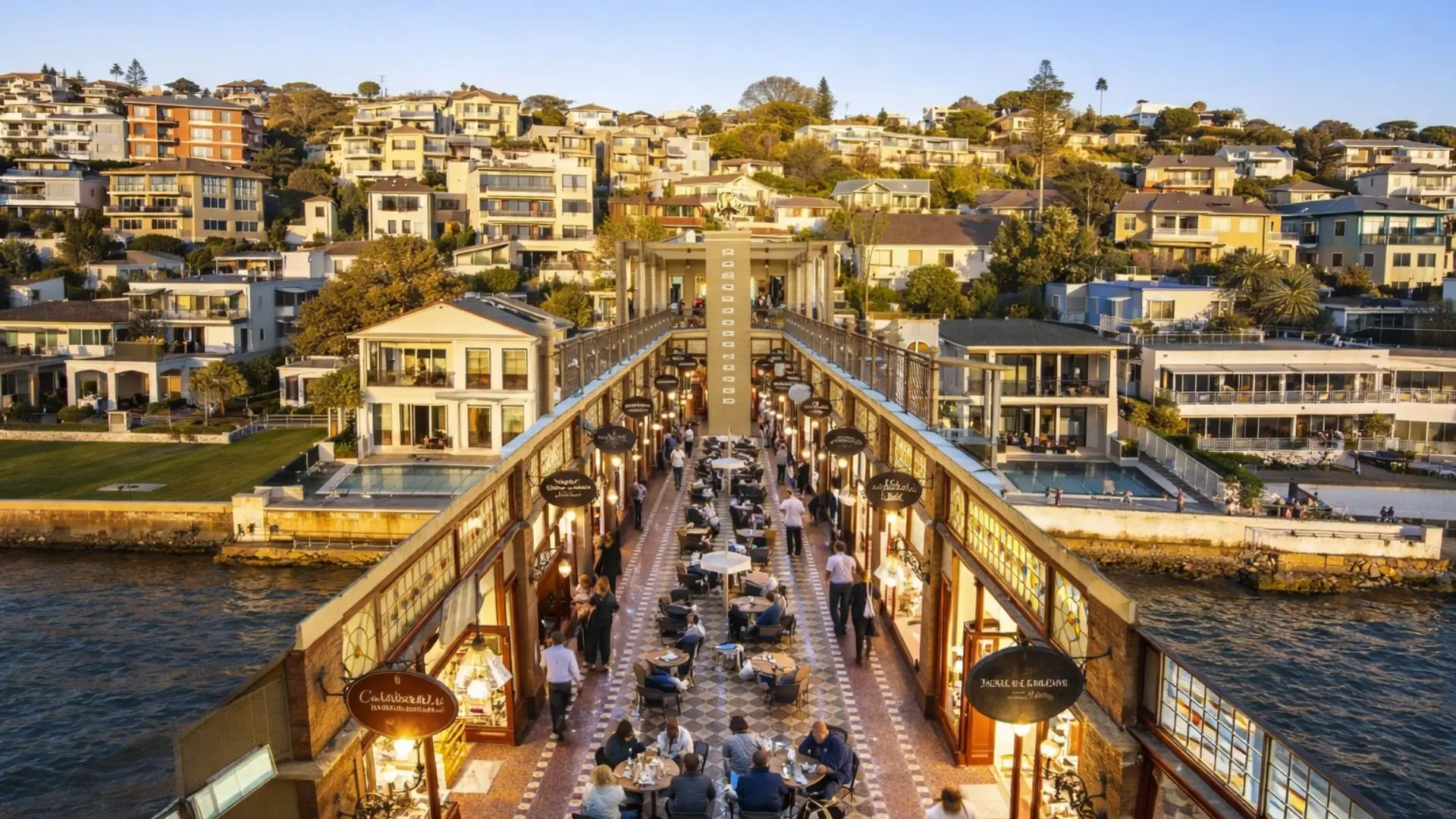
Australia Sees Decline in Household Spending – Australia’s consumer economy is showing early signs of strain as rising living costs and higher interest rates begin to affect household budgets. Australia Sees Decline in Household Spending – Recent data from the Commonwealth Bank of Australia (CBA) indicates that household spending declined in February, marking the first monthly drop after more than a year of consistent growth.
The slowdown highlights growing financial pressure on households as inflation remains elevated and borrowing costs increase. Economists say the shift may signal a change in consumer behavior, with families prioritizing essential expenses while reducing discretionary purchases.
Commonwealth Bank HSI Shows First Decline in Over a Year
The latest Household Spending Insights (HSI) index, released by Commonwealth Bank, recorded a 0.5% fall in February on a seasonally adjusted basis.
This drop ended 17 consecutive months of growth, making it the first significant sign that consumer spending momentum could be slowing.

The bank’s data analysis showed that the decline was largely driven by weaker spending in certain categories, particularly utilities. At the same time, some sectors still demonstrated resilience despite the monthly downturn.
Economists say the HSI is an important indicator because it uses real transaction data from millions of bank customers, providing a near real-time picture of how Australians are spending.
Australia Sees Decline in Household Spending -Interest Rate Hikes and Inflation Driving Spending Changes
According to Belinda Allen, Head of Australian Economics at Commonwealth Bank, the timing of February’s spending drop coincided with a recent interest rate increase by the Reserve Bank of Australia (RBA).
Higher interest rates can directly affect household spending in several ways:
- Mortgage repayments increase, reducing disposable income
- Borrowing becomes more expensive, discouraging major purchases
- Savings become more attractive, leading households to cut back on spending
At the same time, real wages have struggled to keep pace with inflation, meaning many households are effectively experiencing a decline in purchasing power.
This combination of rising costs and slower income growth is pushing consumers to rethink their spending habits.
Shift Away from Discretionary Spending
Economic analysts say that when household budgets tighten, consumers usually reduce discretionary spending first.
Discretionary categories include expenses such as:
- Entertainment and recreation
- Dining out and hospitality
- Retail shopping
- Travel and leisure activities
The February HSI data suggests this shift may already be happening. While essential spending continues, many households appear to be cutting back on non-essential purchases to manage rising costs.
This trend is common during periods of economic uncertainty or higher borrowing costs.
Key Category Data from the February HSI Report
The detailed breakdown of spending categories provides deeper insight into how Australians are adjusting their budgets.
| Category | Monthly Change | Annual Change |
| Utilities | -6.4% | +8% year-on-year |
| Education | -1.0% | -4% year-on-year |
| Recreation | -1.0% | +9.2% year-on-year |
| Transport | -0.8% | Not specified |
| Hospitality | -0.2% | +6.5% year-on-year |
| Food & Beverage | +0.2% | +3.2% year-on-year |
The data highlights a mixed picture.
For example, utilities spending fell sharply month-to-month, yet it remains significantly higher than a year ago due to rising energy costs. Meanwhile, recreation spending declined slightly in February but still shows strong growth over the past year.
This suggests that while consumers are beginning to pull back in some areas, overall spending patterns remain uneven.
Two Possible Economic Scenarios
Economists monitoring consumer activity say there are two potential paths forward depending on how spending trends evolve in the coming months.
Scenario 1: Continued Spending Slowdown
If rising interest rates and cost-of-living pressures continue, households may further reduce discretionary purchases.
In this scenario:
- The HSI index could show additional monthly declines
- Consumer confidence may weaken
- Retail and hospitality sectors could experience slower growth
Some economists believe the Reserve Bank may still implement two or three additional interest rate increases, which could extend financial pressure on households.
Scenario 2: Temporary Spending Dip
Alternatively, February’s decline may prove to be a short-term adjustment rather than the start of a long slowdown.
Several categories still show strong year-on-year growth, particularly recreation and hospitality. If inflation stabilizes and wages gradually improve, spending could recover in the coming months.
Under this scenario:
- Consumer confidence may stabilize
- Spending in leisure and services could rebound
- The HSI index might return to moderate growth
Much will depend on upcoming economic indicators and future monetary policy decisions.
The Role of Interest Rates in Consumer Activity
Interest rates are one of the most influential factors affecting consumer spending.
When the Reserve Bank of Australia raises the cash rate, it increases borrowing costs across the economy. This affects mortgages, credit cards, and personal loans.
For households with large mortgages, even small rate increases can significantly raise monthly repayments. As a result, many families choose to reduce spending elsewhere in order to balance their budgets.
This dynamic is one reason why economists closely watch household consumption data when evaluating the health of the Australian economy.
Why Household Spending Matters for the Economy
Household spending is one of the largest contributors to Australia’s economic growth.
Consumer expenditure influences several sectors, including:
- Retail and shopping centers
- Hospitality and restaurants
- Travel and tourism
- Entertainment and leisure industries
When consumers spend less, businesses may experience slower sales growth, which can eventually affect employment and investment levels.
That is why even a small decline in household spending can attract significant attention from economists and policymakers.
What to Watch in the Next HSI Report
The next release of the Commonwealth Bank Household Spending Insights index will provide crucial clues about whether February’s decline was a temporary fluctuation or the beginning of a broader trend.
Read also – Speed Camera Rule Changes in Australia
Key indicators to watch include:
- Monthly changes in discretionary spending
- Trends in essential household expenses
- Consumer responses to future interest rate decisions
- Changes in real household disposable income
If spending continues to weaken, it could signal that Australia’s consumer economy is entering a slower growth phase.
Conclusion
The recent 0.5% decline in Australia’s Household Spending Insights index highlights the growing financial pressures facing many households. Rising interest rates, persistent inflation, and slower real wage growth are encouraging consumers to rethink how they allocate their money.
Read also – Centrelink Payments Set for 2026 – What the New Increase Means for Households
While the data shows early signs of reduced discretionary spending, it also reveals pockets of resilience across several categories.
Whether this decline marks the start of a longer slowdown or simply a temporary adjustment will become clearer in the months ahead. For now, economists and policymakers will continue closely monitoring consumer activity as a key indicator of Australia’s economic outlook.