
For all its faults and triumphs, Game of Thrones never thought small. Dragons blotted out the sky, episodes stretched well past an hour, and battles unfolded on a scale that reshaped television itself. That sense of enormity carried through to House of the Dragon, which doubled down on spectacle, ambition and blood-soaked political drama.
That’s what makes A Knight of the Seven Kingdoms, premiering Sunday on HBO, such an unexpected turn for the franchise. This new spinoff deliberately scales everything back — the scope, the stakes and even the runtime — and in doing so, finds a modest charm that feels quietly refreshing.
Rather than juggling multiple storylines across continents, the series largely commits to a single narrative thread. Episodes hover around the half-hour mark, and while HBO bills it as a drama, the tone often drifts closer to wry comedy. The threats, at least early on, are not world-ending wars or dynastic collapse, but something far more local: the outcome of a provincial knights’ tournament.
In a universe defined by excess, A Knight of the Seven Kingdoms dares to be restrained — and that restraint is its greatest strength.
A hero unlike Westeros has seen before
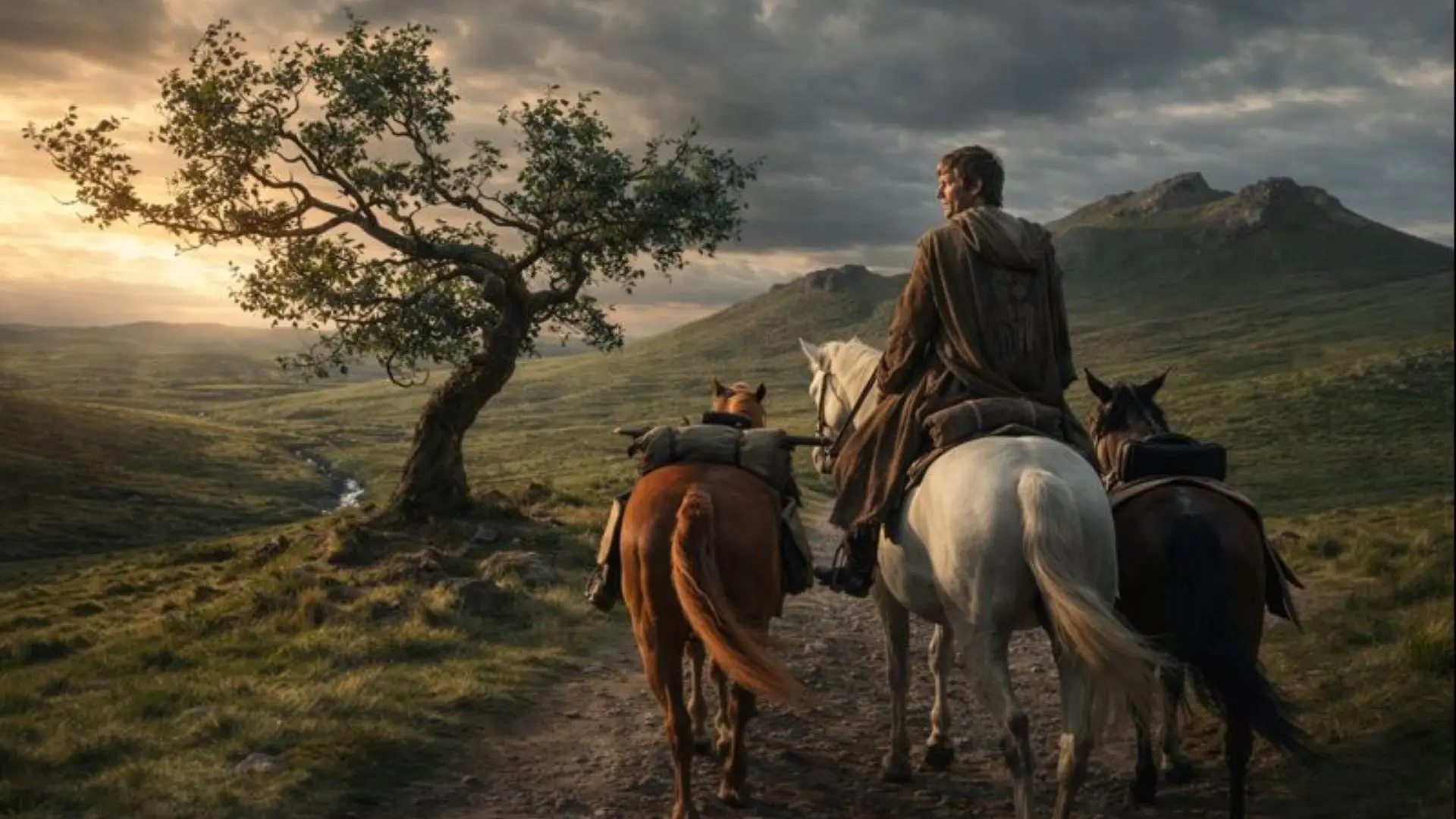
The most striking element of the series is its central character. Ser Duncan the Tall, played with warmth by Peter Claffey, is known simply as Dunk. He is a “hedge knight” — one of Westeros’ landless, wandering warriors, travelling from place to place in search of work, honour or survival.
Dunk cuts an imposing figure physically, towering over most characters, but he is disarmingly gentle in spirit. This is not a cunning schemer or reluctant antihero in the mould of Jon Snow. Dunk is earnest, occasionally naive and driven by a sincere belief in what knighthood should represent.
The show makes its intentions clear from the outset. The iconic Game of Thrones score swells, setting expectations of grandeur — only to undercut them immediately as Dunk is shown relieving himself behind a tree. As the music fades, the smaller, quieter title card appears.
The message is unmistakable: this story exists in the shadow of something bigger, but it is not trying to compete with it.
Knighthood, questioned and redefined
We first meet Dunk as he buries his former master, a rough, drunken knight played by Danny Webb. Whether this man ever formally knighted Dunk remains ambiguous — a crucial detail in a world obsessed with titles and lineage.
The rules of knighthood are conveniently flexible. Any knight can make another knight, and in the absence of witnesses, a man may simply claim the title for himself. Dunk exists in that grey area, caught between legitimacy and necessity.
Penniless and lacking even basic armour, he makes a pragmatic decision: enter a local tournament. Victory could bring not only recognition, but also something far more valuable — better equipment taken from a defeated opponent.
It’s a refreshingly grounded motivation, far removed from prophecies or royal ambition.
Enter Egg, the series’ secret weapon
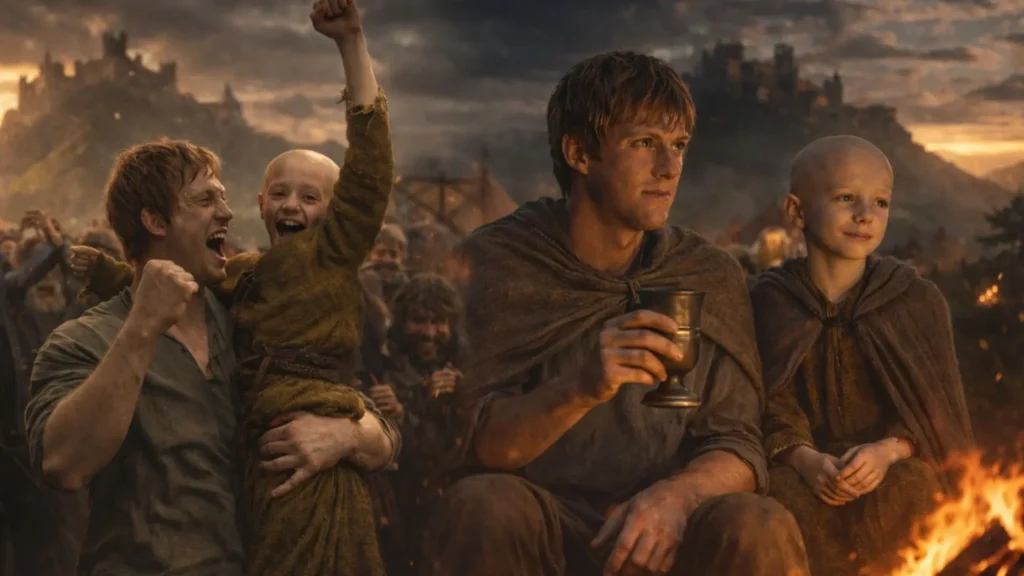
Along the road, Dunk encounters Egg, played by Dexter Sol Ansell. Egg is a scruffy, bareheaded boy with sharp wit, unusual speech patterns and an encyclopaedic knowledge of Westeros’ greatest knights.
Their meeting, set in a stable, is understated but effective. Knights require squires, and Dunk is in no position to be selective. He reluctantly accepts Egg’s help, setting the foundation for what quickly becomes the heart of the series.
Read also –Kayce Dutton’s Full Yellowstone Journey — What to Remember Before Marshals
The dynamic between the two is classic but well-executed. Dunk’s straightforward decency clashes with Egg’s sarcasm and intelligence, creating a rhythm that carries much of the show’s lighter tone. Their conversations are laced with humour, but never feel anachronistic or out of place.
For longtime fans, Egg’s knowledge hints at deeper significance, though the show wisely resists heavy-handed exposition.
Smaller stakes, richer texture
What A Knight of the Seven Kingdoms lacks in spectacle, it compensates for with intimacy. Freed from the obligation to constantly escalate, the series has space to linger on character moments, awkward silences and moral uncertainty.
The tournament itself is treated not as a grand cinematic event, but as a local affair — muddy, dangerous and personal. Victory matters deeply to those involved, even if it barely registers beyond the region. That narrow focus gives the story emotional clarity.
Read also –Billy Bob Thornton Says Sam Elliott Is “a Dream Come True” — Inside Their 40-Year Bond
The humour, subtle but consistent, works because it emerges naturally from character rather than parody. This is not a spoof of Westeros, but a gentle rebalancing of tone.
A tonal shift that won’t suit everyone
This scaled-back approach may not appeal to viewers craving dragons, political intrigue or constant shock. Those expecting another epic saga may find the early episodes surprisingly quiet.
But that quietness is intentional. A Knight of the Seven Kingdoms isn’t trying to expand the mythology; it’s filling in its margins. It explores what life looks like for people who don’t sit on thrones or command armies — those who simply live with the consequences.
Read also – Landman Will Return for Season 3 — Details So Far
For Australian audiences familiar with sprawling prestige dramas, the series feels closer to a character-driven miniseries than a blockbuster fantasy epic. It’s easy to watch, easy to follow and refreshingly unburdened by lore overload.
A confident step sideways for the franchise
Rather than pushing outward, A Knight of the Seven Kingdoms steps sideways — and that creative decision pays off. By embracing smaller stories and gentler humour, it adds texture to the Game of Thrones universe without exhausting it.
Read also – I’m A Celebrity Australia 2026 Start Date Confirmed as Channel 10 Reveals Two Major New Contestants
Its pleasures are modest but genuine. Dunk is an instantly likeable lead, Egg a compelling counterbalance, and the world feels lived-in rather than performative.
In a franchise built on excess, this almost-comedy proves that Westeros still has room to breathe — and that sometimes, the quietest stories leave the strongest impression.