
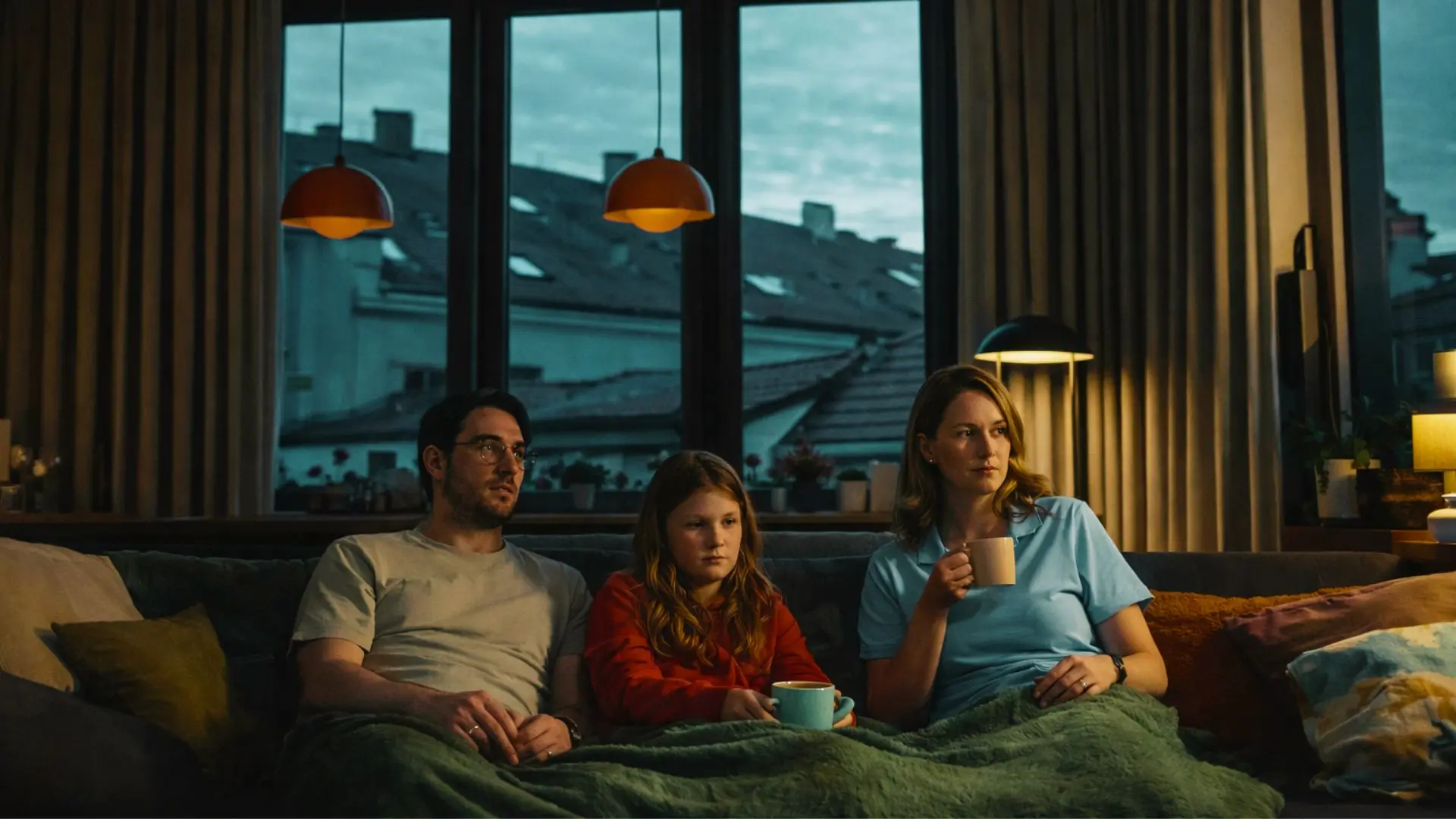
A film backed by Czech producers, How to Divorce During the War, has claimed one of the most prestigious creative prizes at the 2026 Sundance Film Festival, marking another notable international achievement for the country’s growing presence in European arthouse cinema.
How to Divorce During the War, helmed by Lithuanian director Andrius Blaževičius, received the Directing Award in the World Cinema Dramatic section. The project was financed with support from the Czech Audiovisual Fund and co-produced by Jakub Košťál and Vratislav Šlajer of Prague production house Bionaut.
In its official statement, the Sundance jury praised the filmmaker’s approach, citing his “immense talent and steady hand” in shaping a darkly comedic story set during wartime, adding that his restrained observations expose human contradictions while preserving empathy for the characters.
The accolade was presented during the festival’s 42nd edition, regarded as the largest celebration of independent cinema in the United States. The film is slated to arrive in Czech cinemas in the latter half of 2026.
A multinational effort with strong Czech involvement in How to Divorce During the War
Although led by Lithuanian partners, the film was developed as a co-production between Lithuania, the Czech Republic, Luxembourg, and Ireland. Czech participation stretched beyond financial backing, with several domestic creatives contributing to essential production stages.
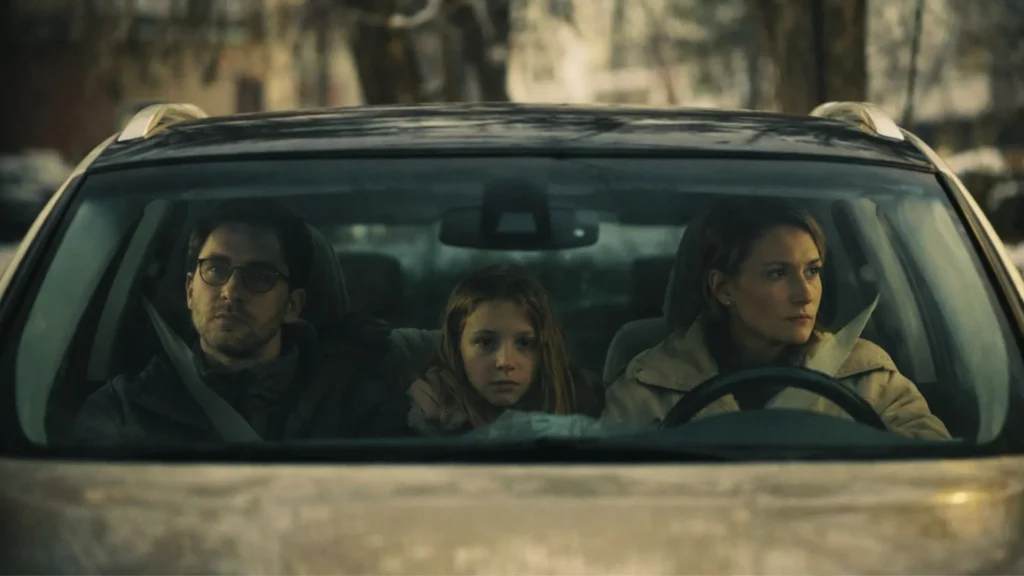
Co-producer Košťál said the Czech team played a meaningful role across departments. Editor Anna Johnson Ryndová, composer Jakub Rataj, makeup designer Adéla Anděly Bursová, and costume designer Aneta Grňáková were all involved in shaping the final cut. He described the movie as “a European film in the best sense of the word,” pointing to the collaborative structure that brought together talent from multiple countries.
Set in Vilnius in early 2022, the story centres on Marija, a senior media executive, and her husband Vytas as they attempt to separate just as Russia launches its full-scale invasion of Ukraine. With daily life disrupted and a refugee crisis unfolding, the couple’s personal split plays out against a region gripped by uncertainty.
The production marks Blaževičius’ third feature-length film and his second partnership with Bionaut, following Runner. In recent years, the director has built a reputation as a key voice in Lithuanian cinema, known for intimate character studies placed within broader social and political contexts.
Recognition at Sundance
The directing award places the film among a small group of European titles to secure major honours at Sundance, a festival historically associated with American independent films but increasingly welcoming international collaborations.
According to Košťál, screenings during the festival were sold out. He said the directing prize validated the film’s artistic strength, describing it as a personal narrative unfolding alongside a significant historical moment rather than a conventional political drama.
Critical reception abroad has also been favourable. Variety critic Guy Lodge characterised the film as “a droll, perceptive look at handling personal crises amid political ones,” noting its understated style, dry humour and performances. The review emphasised its focus on moral complexity over direct political messaging.
Read also- ‘Iron Lung’ Review: Markiplier Delivers a Tense and Unexpectedly Gripping Video-Game Film
Co-founded by Robert Redford, Sundance has long served as a launchpad for independent filmmakers seeking global distribution. Over the decades, the festival has helped elevate directors including Steven Soderbergh, Jim Jarmusch, and Quentin Tarantino. For European productions, recognition at Sundance often opens doors to broader theatrical and streaming opportunities.
Read also- Australian Idol 2026 : Judge Marcia Hines Admits the Nerves Never Really Go Away
Czech projects have enjoyed success at the festival before. In 2007, Irish musical drama Once won the audience award, featuring Czech singer-songwriter Markéta Irglová. Her song Falling Slowly, co-written with Glen Hansard, later secured an Academy Award.
With this latest victory, How to Divorce During the War strengthens the international profile of Czech-backed films and highlights the expanding role of Czech producers and creatives in cross-border European filmmaking.