
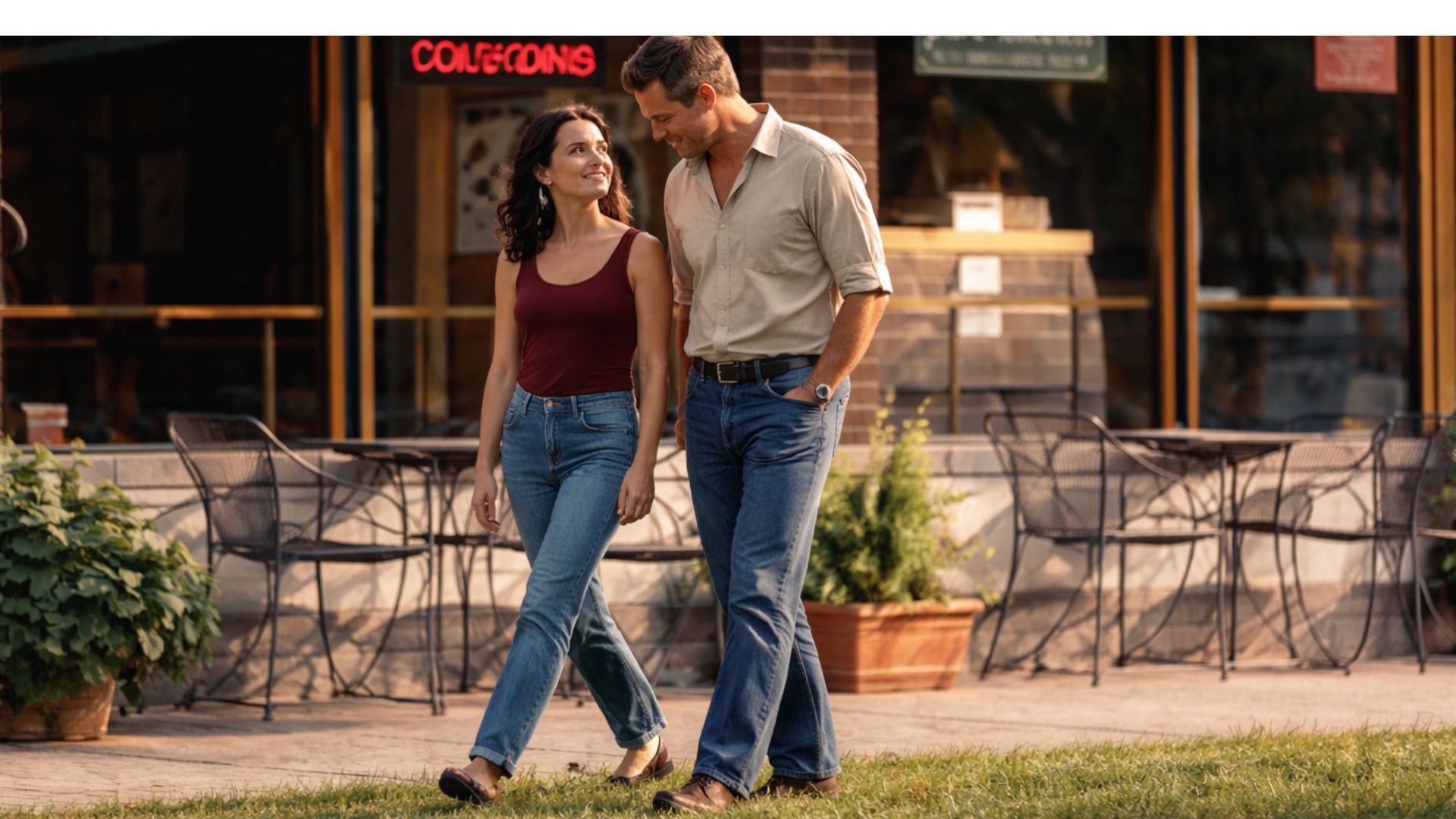
Carousel festival movie review : There’s something especially deflating about a Sundance opener that feels like it’s already apologizing for itself, and Carousel arrives with that exact energy — gentle, well-meaning, and weirdly hollow, like a beautifully wrapped gift box with nothing inside. At a festival currently distracted by grief over Robert Redford and nervy about its impending move from Park City, this should have been the kind of quietly soulful indie that reminds everyone what Sundance is for. Instead, it lands with a polite thud, the cinematic equivalent of a soft handshake when you were hoping for a hug.
On paper, this is prime Sundance bait: a small, character-driven American drama about love, regret, and second chances, the very subgenre that built the festival’s reputation over five decades. These days, though, movies like this don’t get the runway they used to. You think about something like 2023’s A Little Prayer — tender, modest, perfectly pitched for Park City — which then quietly vanished for over a year before barely anyone saw it. The world is currently brutal to films that don’t scream for attention, and Carousel, for all its yearning glances and wistful needle drops, never quite earns the emotional urgency it keeps promising.

Writer-director Rachel Lambert clearly wants to intoxicate us with feeling. She layers the film in lush music cues, sometimes so dominant they blur into sonic wallpaper thanks to dodgy mixing, and bathes her characters in lovingly framed shots of small-town nature. It’s the same sensory softness she brought to last year’s Sometimes I Think About Dying, another Sundance entry that leaned heavily on atmosphere and vibe. Here, it works in bursts. You can feel Lambert straining to pull us into the headiness of love lost and found, and occasionally she gets there. But no amount of golden-hour light can disguise a script that feels sketched rather than written.
The cast does some heroic heavy lifting. Chris Pine, who’s been floating a bit aimlessly through recent projects, makes a strong case for a future in smaller, talkier dramas. He plays a forty-something doctor emotionally stuck in neutral, quietly unraveling. His daughter, played by Abby Ryder Fortson from Are You There God, It’s Me Margaret, is simmering with anger and anxiety. His medical practice is on the brink, staffed by Sam Waterston and Heléne Yorke, both charming and criminally underused. And then, like a rom-com ghost from his past, Jenny Slate reappears as the long-lost love who might finally jolt him toward happiness.
It’s all very Sundance 101 — not automatically a bad thing — but Lambert never settles into these lives long enough for them to feel solid. Scenes drift in and out like half-remembered dreams, and the film keeps mistaking thin writing for subtlety. We’re asked to care deeply about people we barely know, to project emotional backstories the script hasn’t bothered to earn. By the time the film’s aesthetic charms wear off, what’s left is a set of characters who feel more like mood boards than human beings.
There’s a late, extended argument between Pine and Slate that’s raw, messy, and genuinely well-acted. It should be the emotional payoff. Instead, it plays like overhearing a dramatic couple at the next table in a restaurant — you’re riveted by the intensity, but you have no idea what their actual fight is about. It’s gripping and oddly empty at the same time. The whole film has that energy, as if it’s a condensed miniseries with crucial connective tissue sliced away. Pine and Slate have enough chemistry to fuel something far better, yet we’re never quite sure who they’re supposed to be to each other beyond “sad adults with unfinished business.”
Lambert does stumble into a few intriguing knots: the uneasy politics of raising someone else’s child, the awkwardness of trying to reclaim youthful romantic abandon when you’re no longer young, the fear of choosing wrong when you don’t have time for many more wrong choices. But she doesn’t know where to take any of them. An overcooked, syrupy ending strains desperately for swoon and lands somewhere closer to polite applause.
Read also- Ha-chan Shake Your Booty!’ Movie Review: Rinko Kikuchi Turns Grief Into a Dance-Floor Delight
Carousel isn’t offensive or embarrassing or even aggressively bad. It’s just… there. It circles its themes of love and loss with earnest determination and then never quite touches down. Watching it, you feel a creeping listlessness seep from the screen into your own bones, that peculiar Sundance sensation of wanting a film to work more than it actually does. I left wishing I felt anything stronger than mild disappointment, which might be the cruelest verdict of all for a movie so obsessed with big feelings.