
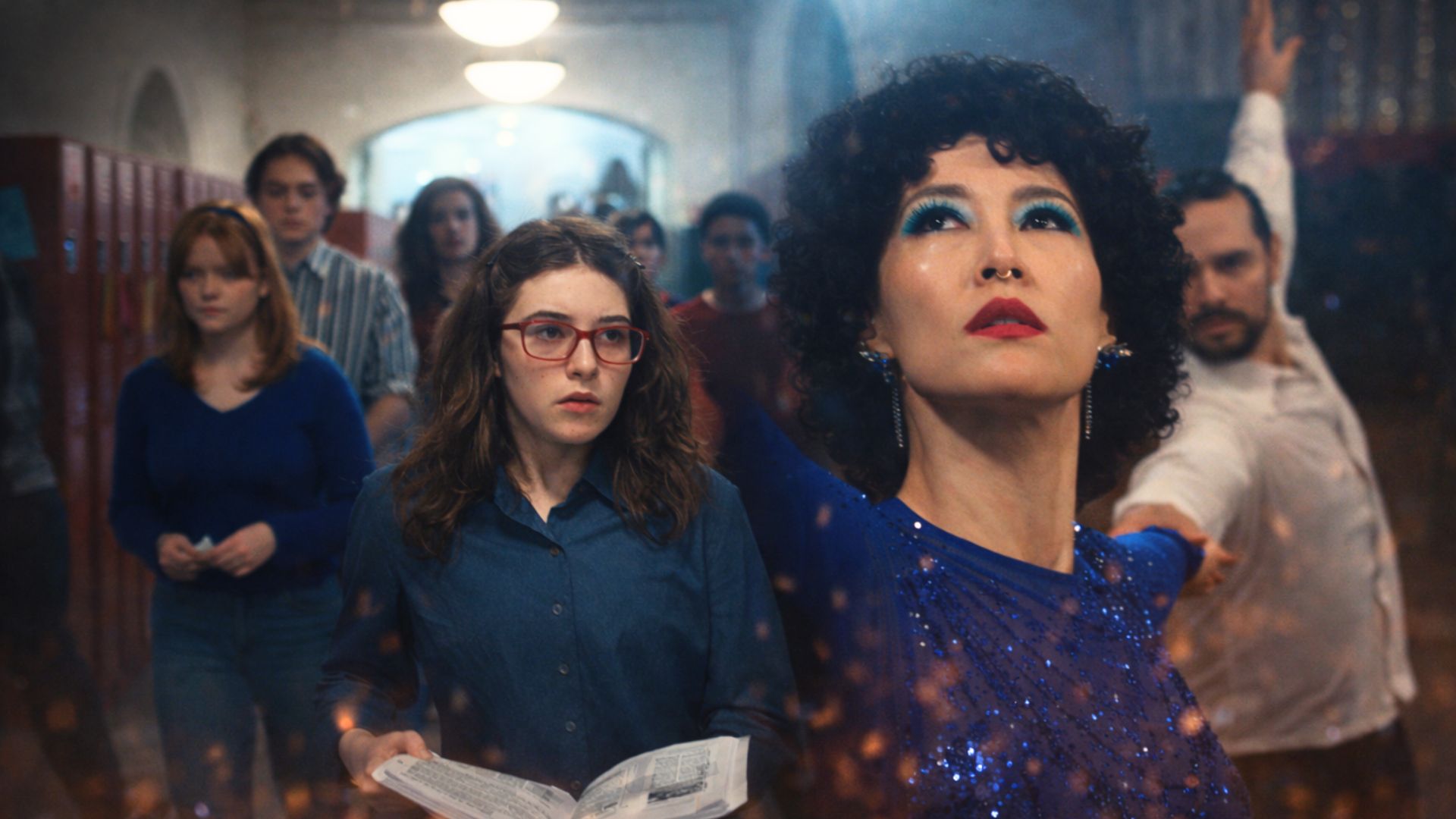
Grief doesn’t usually shimmy onto the dance floor in spangly dresses and heavy blue eyeshadow, but Ha-chan, Shake Your Booty! dares it to—and somehow pulls it off without ever feeling cute about death. It’s the kind of small, Sundance-born surprise that sneaks up on you, wins you over with a goofy grin, then quietly punches you in the chest when you least expect it.
Rinko Kikuchi’s Haru is introduced as a woman already slightly out of step with the world, all unstylish curls and awkward earnestness, floating through Tokyo’s ballroom dance competitions with her Mexican husband, Luis, played with gentle warmth by Alejandro Edda. Their scenes together have that lived-in tenderness that makes what comes next hurt more: Luis dies suddenly, and Haru responds by folding inward, shutting out noise, people, and possibility. It’s a familiar arc on paper, but the film refuses to wallow. Instead, it lets comedy and surreal whimsy creep in sideways, the way real coping mechanisms often do.
When Haru’s sister Yuki, portrayed with soft patience by Yoh Yoshida, drags her to a dance class, it’s less about healing than basic survival. Enter Fedir, the instructor, embodied by Alberto Guerra with an easy, low-key charisma that explains Haru’s instant fixation. The crush doesn’t feel like a rom-com contrivance so much as a human reflex: grief looking for oxygen.
Haru stares. She stumbles through small talk. She boldly asks him out to dinner, fully expecting rejection, and when he says yes, her face lights up with a mix of triumph and terror. Later, she’s secretly Googling him, trying to decode his life, his absent wife, the hints that he might be in an open marriage. It’s a little unhinged, a little sad, and weirdly relatable. Kikuchi makes all of it feel true, even when Haru’s behavior teeters into the absurd, because you can always sense the ache underneath.
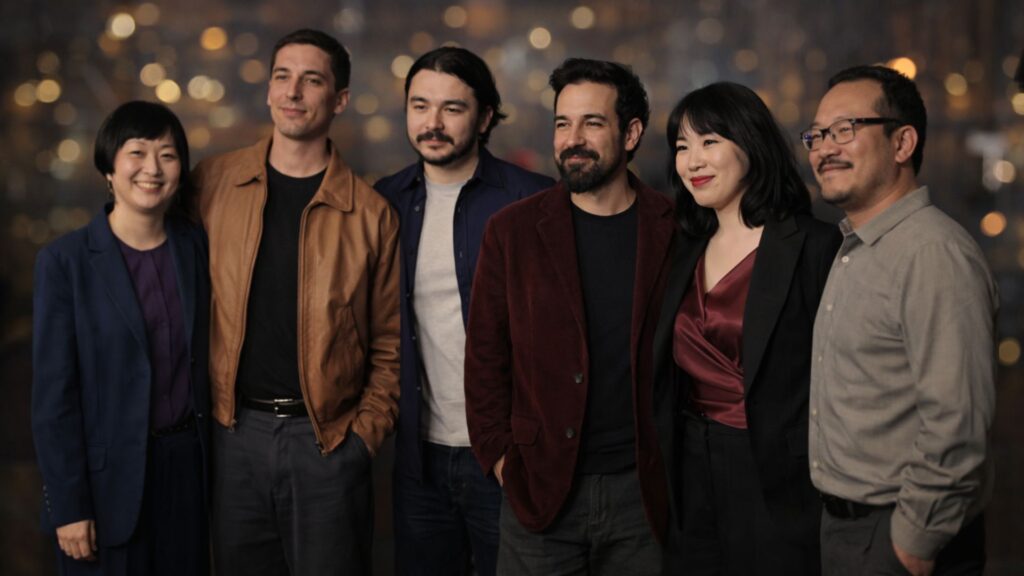
Josef Kubota Wladyka, who co-wrote and directed the film, shifts tones with a confidence that feels almost reckless. One moment you’re watching Haru argue with Luis’ father and sister, who want to take his body back to Mexico, while she insists on cremation because she believes his spirit won’t rest otherwise. It’s raw, tense, and grounded in cultural collision. The next moment, the film slips into a fantasy where Haru imagines dancing alone with Fedir, the background light narrowing into a spotlight as if reality itself is politely stepping aside. Daniel Satinoff’s cinematography makes these transitions feel fluid instead of jarring, as if grief itself has bent the rules of the world.
The surreal touches are deployed sparingly, but memorably. In one of the film’s strangest and most affecting images, a giant black crow wanders into Haru’s home. It turns out to be her imagining Luis in a crow costume, an avatar of death that’s also oddly comforting. It’s funny. It’s eerie. It makes emotional sense in a way that logic can’t quite explain. Wladyka never overuses these moments; they’re windows into Haru’s inner life, not distractions from it.
The film’s buoyancy owes a lot to its visual and musical choices. It isn’t a musical, but it behaves like one in spirit. A pop soundtrack hums beneath the story, and the dance scenes are less about technical perfection than emotional release. There’s a knowingly cheesy chapter heading—“Nobody Puts Baby in a Corner”—that sets up a playful Dirty Dancing homage, and another fantasy sequence where a group of drunken men in business suits suddenly break into synchronized choreography to “Be My Baby.” It’s the kind of scene that could crash a lesser film, but here it lands as a glimpse into Haru’s private wish that the world might, just once, move in rhythm with her.
The supporting cast deepens the texture without stealing focus. Yoh Yoshida’s Yuki is grounded and sympathetic, a woman trying to keep her sister tethered to reality. YOU plays their cousin Hiromi as brash, well-meaning, and hilariously wrong about American culture, barking encouragements to “shake your booty” with a confidence that’s both cringe-inducing and oddly loving. It’s Hiromi who gives the film its knowingly ironic title, a phrase that sounds ridiculous until you realize how perfectly it captures the movie’s mix of sincerity and self-awareness.
Wladyka has said the story was inspired by his Japanese mother—Haru even shares his last name, Kubota—and it marks a sharp stylistic pivot from his earlier, gritty thrillers like Manos Sucias and Catch the Fair One, not to mention his work on Narcos. That background makes the film’s light touch even more impressive. He treats grief not as a solemn monument but as something porous, messy, occasionally ridiculous, and very much alive.
Read also- The 2026 Oscar Nominations Are Here — Full List of Nominees
The film also sidesteps the usual youth-obsessed energy of dance movies. Haru and Luis compete in the Amateur Latin Senior category, and her sister throws her a 46th birthday party. This is a story about starting over in middle age, about desire and reinvention refusing to retire just because life has thrown you a cruel curveball. Even the costume party scene, where Haru shows up dressed in skeletal Day of the Dead makeup, plays as both a private tribute to Luis and a quiet declaration that she’s still here, still looking forward, even if she doesn’t fully know how yet.
Read also- Finding Her Edge Netflix Series Review: The Ice Is Cold, the Drama Plays It Safe
By the time the film reaches its optimistic ending, it hasn’t magically cured Haru of her sorrow. That’s the point. The joy it offers feels earned precisely because it coexists with loss. Kikuchi, who once disappeared into the obsessive oddness of Kumiko, the Treasure Hunter and earned an Oscar nod for Babel, glides through these tonal shifts with elegance and emotional precision. She makes Haru funny without turning her into a punchline, and vulnerable without draining her of dignity.
Read also- The Lord of the Rings Extended Trilogy Returns to Prague Cinemas for 25th Anniversary
Ha-chan, Shake Your Booty! isn’t flashy, and it isn’t trying to be profound with a capital P. It’s a small, strange, unexpectedly charming film that understands something quietly radical: grief doesn’t always want a therapist or a grand speech. Sometimes it just wants a dance floor, a pop song, and the nerve to ask a beautiful stranger out to dinner. I left it smiling, a little teary, and oddly hopeful, which feels like exactly the kind of emotional cocktail this story was meant to serve.