
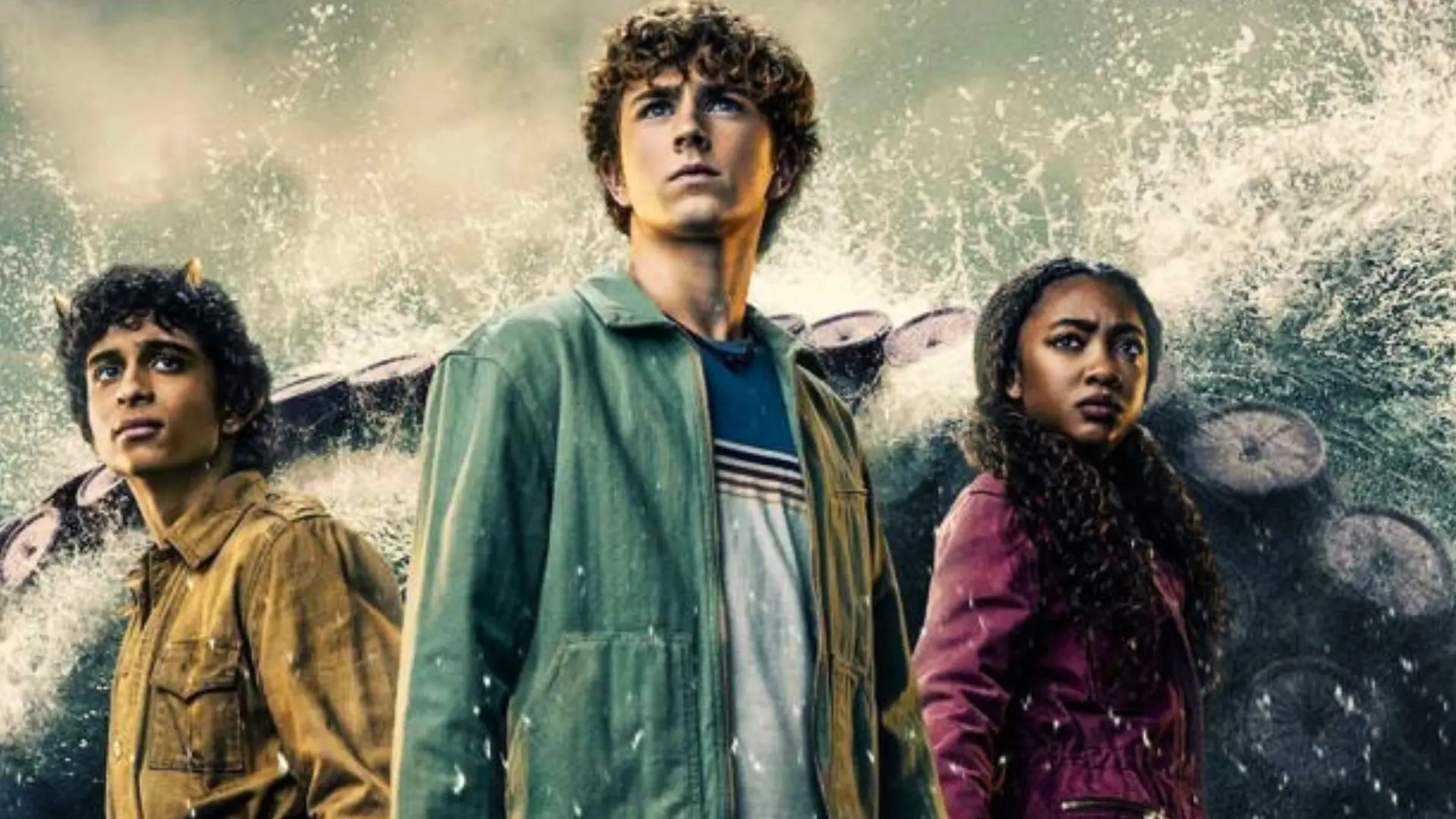
Percy Jackson Season 2 Finale Review : Why are fans still talking about the Percy Jackson Season 2 finale days after it dropped? What made “The Fleece Works Its Magic Too Well” feel bigger, darker and more emotional than anything that came before it? And why does this episode now shape all expectations for Season 3?
Disney+ closed out Percy Jackson and the Olympians Season 2 with an episode that pushed its stakes, emotions and mythology to new levels. The finale didn’t just resolve the Sea of Monsters quest — it reshaped the story’s future with confrontations, revelations and a cliffhanger that has left viewers searching for answers.
What Made the Season 2 Finale Feel Different From the Rest?
From its opening moments, “The Fleece Works Its Magic Too Well” signals a shift in tone. The episode leans harder into tension and consequence, moving beyond monster-of-the-week action into choices that carry lasting weight.
The quest for the Golden Fleece, which has driven the entire season, reaches its payoff as Percy (Walker Scobell), Annabeth (Leah Sava Jeffries), Grover (Aryan Simhadri), Clarisse (Dior Goodjohn) and Tyson (Daniel Diemer) finally confront the outcomes of everything they’ve risked.

The pacing tightens, the dialogue sharpens and the sense of danger becomes more immediate. Instead of spreading its focus across multiple subplots, the finale locks in on a few pivotal moments and lets them unfold with intensity.
How Did the Show Pay Off the Sea of Monsters Quest?
Season 2 has followed the broad structure of the Sea of Monsters storyline, sending the demigods across dangerous territory in search of the Golden Fleece to save Camp Half-Blood.
Across the season, the series balanced humor, character bonding and mythology. The finale pulls those threads together by tying the Fleece directly to the future of the camp and the emotional journeys of the main characters.
Rather than treating the Fleece as a simple magical solution, the episode frames it as something powerful but unpredictable — a tool that fixes one problem while opening the door to far more complicated consequences.
Why Was Percy’s Confrontation With Luke So Intense?
The emotional and narrative centrepiece of the finale is Percy’s showdown with Luke (Charlie Bushnell).
What begins as a sword fight quickly escalates into a raw, physical struggle. The choreography shifts from controlled combat into something messier and more desperate, reflecting how personal the conflict has become.
Every strike and counter carries emotional history. Luke isn’t just an enemy — he represents betrayal, broken trust and the widening divide between demigods and the gods they serve.
The scene lands as one of the series’ most charged moments so far, using close-quarters action to underline how far Percy has been pushed since the start of Season 1.
Did the Finale Leave Key Character Dynamics Underdeveloped?
While the episode delivers on spectacle, it also makes noticeable trade-offs in character focus.
The dynamic between Percy and Annabeth — often referred to by fans as Percabeth — takes a back seat in the finale. The episode prioritises plot resolution and major confrontations, leaving less room for the slower, quieter moments that have defined their relationship across the season.
Read also – Kidnapped Elizabeth Smart Movie Review: What Makes the Netflix Documentary So Unsettling
Annabeth’s role in the action is also more limited than earlier episodes. Her injury sidelines her during critical sequences, reducing her presence in the battle itself.
These choices don’t undermine the season’s broader arc, but they do stand out in an episode that otherwise aims to bring every storyline to a peak.
What Was Revealed in Thalia’s Flashback With Zeus?
The emotional core of the finale arrives through a flashback involving Thalia and Zeus.
For the first time, viewers are shown what really happened on the night Thalia was turned into a tree. The scene reframes her backstory, turning a long-standing mystery into a moment of confrontation and painful clarity.
Read also –Fallout Season 2 Episode 6 Review: Why Barb’s Story Is Suddenly Clearer
The interaction reinforces one of the show’s recurring themes: the gods are not reliable guardians, and their decisions often come at devastating personal costs.
Courtney B. Vance steps into the role of Zeus with a restrained but commanding presence. His portrayal leans into quiet authority rather than explosive rage, making the exchange with Thalia feel controlled, tense and unsettling.
The scene also deepens Thalia’s importance to the wider story, positioning her as more than just a rescued figure from the past.
How Did the Supporting Cast Strengthen the Finale?
Beyond the core five demigods, the episode leans heavily on its veteran performers to ground the story’s mythological scale.
Read also – Steal TV Series Review: What the High-Stakes Thriller Gets Right About Power and Money?
Glynn Turman and Toby Stephens continue to anchor their roles with emotional weight, adding gravitas to scenes that might otherwise lean too heavily into fantasy spectacle.
Their presence helps sell the seriousness of the unfolding events, reminding viewers that the consequences of the finale stretch far beyond a single quest or location.
The balance between younger leads and seasoned actors gives the episode a layered tone, blending coming-of-age stakes with larger mythic consequences.
What Does the Cliffhanger Mean for Season 3?
The finale doesn’t just close a chapter — it deliberately cracks open the next one.
With the prophecy still looming and Thalia’s future allegiance left unresolved, the episode ends on a note of uncertainty. Non-book readers are left asking the same question: friend or foe?
Rather than offering a neat resolution, the closing moments reframe the central conflict, shifting the story’s direction in a way that affects every main character.
It’s a calculated move that keeps long-time fans and newcomers equally invested, setting up Season 3 as a continuation rather than a fresh start.
Why Is This Finale Being Seen as a Turning Point for the Series?
“The Fleece Works Its Magic Too Well” marks a tonal evolution for Percy Jackson and the Olympians.
Where earlier episodes leaned into adventure and discovery, the finale commits to darker emotional territory and irreversible choices. Characters change. Relationships fracture. The world of the show becomes more complicated and less forgiving.
The episode also confirms Disney+’s willingness to let the series grow with its audience, allowing its mythology and character arcs to deepen rather than reset each season.
What It Means for Percy Jackson and the Olympians Going Forward
By the time the credits roll, the series feels transformed.
Season 2 closes not with comfort, but with uncertainty — a deliberate narrative choice that signals bigger risks and higher emotional stakes ahead.
With Season 3 already on the horizon, the finale positions Percy, Annabeth and the rest of the demigods at a crossroads. The story they step into next will be shaped by everything that went wrong — and everything that was revealed — in “The Fleece Works Its Magic Too Well.”
For a show built on quests and prophecy, the Season 2 finale proves that the real weight of Percy Jackson and the Olympians lies not in its monsters or magic, but in the choices its characters are now forced to make.