

Is The Housemaid just another glossy erotic thriller, or is there more unsettling intent beneath its surface? That question has followed the film as it rolls into Prague cinemas this weekend, after opening in the United States over Christmas.
Starring Sydney Sweeney and Amanda Seyfried, the film has drawn attention for its charged performances, graphic turns, and a structure that keeps viewers guessing — sometimes to a fault.
What kind of story is The Housemaid telling?
At its core, The Housemaid centres on Millie Calloway, a young woman on the brink. Played by Sydney Sweeney, Millie is living out of her car, unemployed, and desperate for stability when the film opens.
That chance arrives unexpectedly when she is hired as a live-in housekeeper at a vast Long Island home. The property, filmed using real locations in neighbouring New Jersey, belongs to Nina Winchester, a wealthy wife and mother portrayed by Amanda Seyfried.
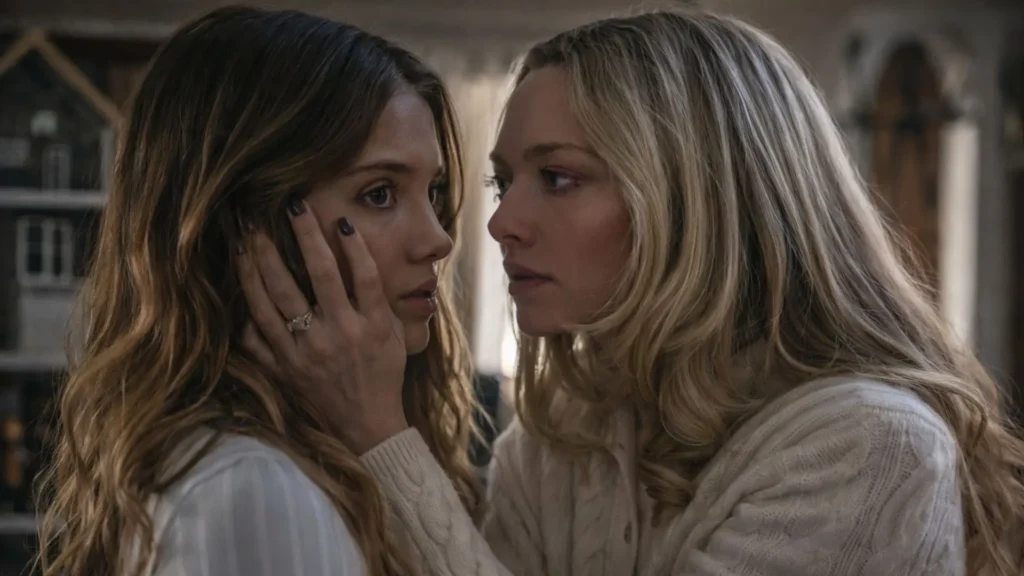
The setup initially feels familiar: a vulnerable outsider entering a private domestic world with unspoken rules and simmering tensions. But the film quickly signals that appearances, and motivations, are unreliable.
Why does Millie’s new job feel dangerous from the start?
Millie’s employer Nina appears warm and welcoming in their early interactions, striking up a bond that resembles instant sisterhood. That connection does not last.
Nina’s behaviour soon becomes erratic and hostile. She lashes out over imagined slights, shifts moods without warning, and places Millie under constant scrutiny. The housekeeper learns that Nina has a history of mental illness, including a recent stay in a psychological facility.
Despite trying to tread carefully, Millie finds no real relief. Each attempt to appease Nina only deepens the sense that the household is unstable — and potentially unsafe.
How does Andrew complicate the power dynamic?
Amid Nina’s volatility, her husband Andrew offers a striking contrast. Played by Brandon Sklenar, he presents as calm, attentive, and emotionally available.
Andrew becomes Millie’s confidant, offering comfort during late-night conversations and bonding over shared routines like watching Family Feud. That connection slowly develops into mutual attraction.
The film makes clear that this emotional closeness is not neutral. As the tension grows between Millie and Andrew, it feeds directly into Nina’s instability, setting all three characters on a collision course that feels increasingly inevitable.
When does the film reveal its real intentions?
As an erotic thriller, The Housemaid openly draws on genre traditions established by films such as Fatal Attraction and The Hand That Rocks the Cradle. It leans into sex, jealousy, and violence with a knowingly heightened tone.
Read also – Hilary Duff Returned to the Stage Show In London
What distinguishes it — at least initially — is the suggestion that the audience is being guided toward a familiar revelation about Millie’s past. That expectation is partially fulfilled, but not in isolation.
The film delivers multiple narrative twists, one of which lands as a genuine surprise. The problem is not the content of those revelations, but their delivery.
Why does the film’s structure become its biggest obstacle?
Just as the story reaches peak intensity, The Housemaid pauses for an extended explanation of its own mechanics. Around the 75-minute mark, the film shifts into a prolonged exposition sequence lasting nearly half an hour.
Read also – Tell Me Lies Season 3 Episode 4 Release Time on Hulu: What You Need to Know
Characters carefully narrate backstory and motivation, spelling out details that had previously been implied. This approach drains momentum at a critical moment, leaving the final act compressed despite a total running time of 131 minutes.
The effect is less suspenseful than intended, replacing ambiguity with over-clarity and forcing the conclusion to race toward its endpoint.
How does Paul Feig’s direction shape the film?
Directed by Paul Feig, The Housemaid marks his third entry into the thriller genre following A Simple Favor and its sequel. Unlike those films, Feig abandons self-aware humour and irony almost entirely here.
Read also – Home and Away’s 2026 Return Reveals Shock Death
Instead, he commits to the genre’s conventions without winking at the audience. That straight-faced approach allows the film to embrace its pulpy instincts more fully, positioning it as an elevated take on the kind of thrillers once associated with Lifetime-style melodrama.
The result is a film that often works best in individual scenes, even when the overall structure falters.
Why do the performances carry so much weight?
The film’s strongest asset is its cast. Amanda Seyfried dominates the first half with a performance that swings deliberately between fragility and menace. Her Nina is exaggerated, wide-eyed, and volatile, with a cartoonish quality that appears intentional rather than accidental.
Sydney Sweeney meets that energy with a carefully controlled performance. She shifts convincingly between vulnerability and calculation, allowing Millie to exist in multiple registers without revealing her full hand too early.
Read also – The Rip true story ben affleck: Real Police Raid Behind Netflix Thriller
Brandon Sklenar, while less showy, provides a steady presence as Andrew and plays a key role in grounding the central triangle. His scenes with Sweeney are notably explicit, adding to the film’s charged atmosphere.
What does The Housemaid ultimately leave audiences with?
Despite its misjudged pacing and heavy-handed explanations, The Housemaid largely succeeds at being the film it sets out to make. It is knowingly trashy, unapologetically erotic, and anchored by performances that elevate the material beyond B-movie territory.
Read also – Hollywood Star Matt Damon Exposes How Netflix Tailors Content for Modern Viewers
The film’s tendency to overexplain undermines the mystery it works so hard to establish. Still, its commitment to tone and character keeps it engaging moment to moment.
Read also – The Next Batman Film Introduces Two-Face — and Raises the Stakes for Gotham
For viewers willing to accept its excesses and structural flaws, The Housemaid remains a bloody, provocative thriller that understands its lineage — and embraces it without apology.