
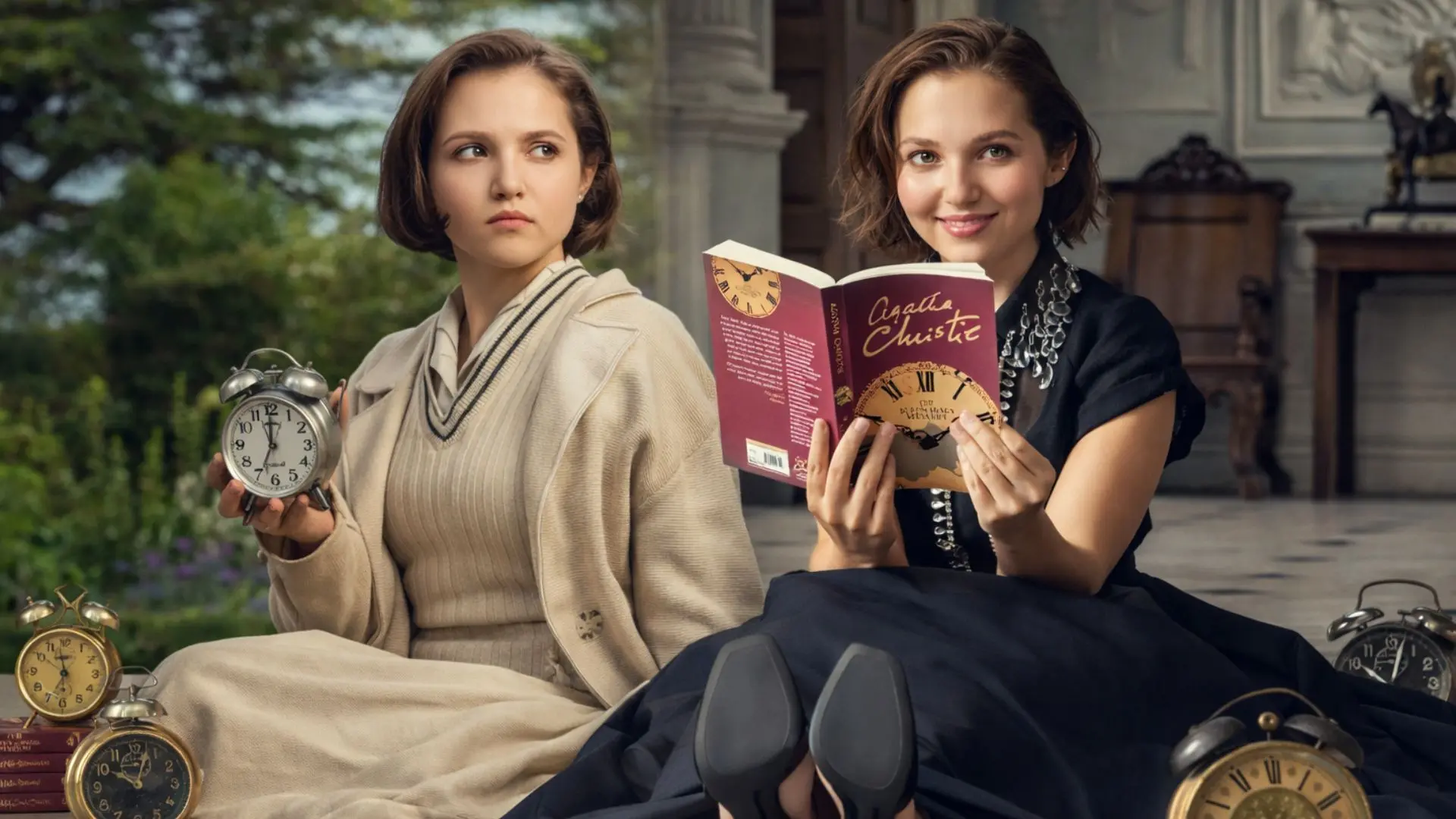
It’s that familiar time of year again when Agatha Christie returns to our screens, usually dressed up with a modern edge and a darker emotional core. Recent BBC adaptations, particularly under Sarah Phelps, have leaned hard into post-war trauma, grief and social unease, giving Christie’s stories a sharper, more adult bite.
Netflix’s Agatha Christie’s Seven Dials, however, takes a very different path — and not necessarily a rewarding one.
A Shift in Tone From the Outset
This latest adaptation, written by Chris Chibnall, abandons the psychological weight of recent Christie retellings and heads back into full period territory. Think starched costumes, polished accents and dialogue that exists almost entirely to move the plot from one clue to the next.
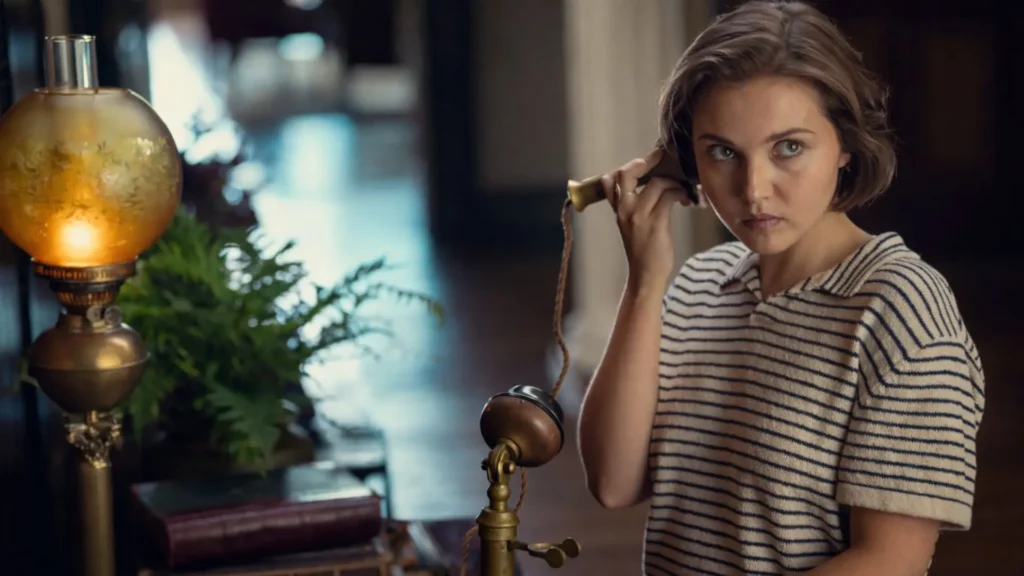
The story unfolds across three hour-long episodes, structured less around atmosphere or character depth and more around methodically placing puzzle pieces until everything snaps into place at the end.
The opening scene sets the tone immediately. Actor Iain Glen appears briefly, meeting a violent death after being gored by a bull in Ronda in 1920. Just moments earlier, he receives a note marked with a clock — a visual cue that clocks, dials and time itself will play a central role in what follows.
Enter the Country House and Its Social Divide
From Spain, the series shifts to a lavish English country house hosting a party thrown by wealthy northern industrialists, the Cootes. They’re renting the estate from Lady Caterham, played by Helena Bonham Carter — a woman with impeccable lineage but dwindling funds.
The contrast is not subtle. Money versus manners. Cash versus class. The script makes sure viewers don’t miss the point, even including a scene where Lady Coote cheats at bridge to underline where everyone stands socially.
There are moments where the dialogue strains credibility, particularly when supposedly upper-crust characters trip over basic grammar. Whether intentional or not, it becomes a distraction in a show so reliant on period authenticity.
A Death That Raises Too Many Questions
At the centre of the mystery is Lady Eileen “Bundle” Brent, portrayed by Mia McKenna-Bruce. She’s enjoying the party when Gerry Wade, her late brother’s closest friend — killed during the war — asks her to dinner and hints strongly at a proposal.
By morning, he’s dead.
The cause appears to be an overdose of sleeping draught, but the details don’t add up. Gerry was famously such a deep sleeper that he never needed medication. His friends even hid eight alarm clocks around his room as a prank to wake him — yet after his death, the clocks are neatly arranged on the mantelpiece. One is missing, leaving seven. Later, the missing clock is found smashed on the lawn.
Naturally, questions pile up.
Amateur Sleuthing Takes Over
After a clumsy police officer contaminates the crime scene, Bundle decides to investigate on her own. The Cootes make a hasty exit, not before leaving emotional wreckage behind among the household staff and delivering a blunt speech about how easily money can buy entry into elite spaces.
From here, the series settles into familiar rhythms: interviews with distressed servants, suspicious stains on furniture, anonymous notes, cryptic letters referencing “seven dials” without explanation, and trips into London that promise intrigue but deliver little momentum.
The tone increasingly feels less like classic Christie and more like a children’s adventure mystery, despite the adult setting and subject matter.
Star Power Arrives — A Little Late
Midway through the story, the plot widens to reveal the true identity of Iain Glen’s character, while Bundle’s ally — played by Nabhaan Rizwan — is abruptly shot in a scene that lands more awkward than impactful.
It’s only when Martin Freeman appears as Superintendent Battle that the production finds firmer footing. Freeman brings a grounded authority and natural rhythm that the series has been missing. As his character restores order to the investigation, Freeman himself injects credibility into the show, anchoring scenes with confidence and restraint.
Read also –The Rip story review – The Rip Delivers a Glossy Netflix Thriller With Affleck and Damon
His presence helps pull the narrative together, but by this point, viewers have already invested several hours in a story that feels oddly dated.
A Retro Style That Struggles to Land
Despite modern production values, Seven Dials feels curiously old-fashioned — more so than classic Joan Hickson-era Miss Marple episodes. The attempt to blend retro storytelling with contemporary sensitivity around emotional wellbeing doesn’t quite work, leaving the series caught between eras.
Read also – Inside Andre Agassi and Steffi Graf’s Marriage: The Simple Rule That Keeps Them Strong
For Australian audiences accustomed to sharper, more character-driven crime dramas, the pacing may feel especially sluggish. While the mystery is competently assembled, it rarely surprises or excites, relying heavily on exposition rather than tension.
Final Verdict
Agatha Christie’s Seven Dials looks the part and boasts a capable cast, but its approach feels out of step with what modern viewers expect from prestige mystery television. Without the psychological depth that has elevated recent Christie adaptations, the series settles for a polished yet pedestrian retelling that struggles to justify its length.
Read also – Woman Killed by Falling Tree Branch as Wild Weather Batters NSW and Eastern Australia
Martin Freeman’s late arrival offers a brief lift, but whether that’s enough to carry viewers through all three episodes will depend on their tolerance for slow-moving, nostalgia-heavy storytelling.
Agatha Christie’s Seven Dials is streaming now on Netflix.