
‘Good Luck, Have Fun, Don’t Die’ Movie Review – Director Gore Verbinski returns with an ambitious and surprisingly sharp science-fiction satire in ‘Good Luck, Have Fun, Don’t Die’ Movie Review . The film, which premiered in the United States last month and is now arriving in cinemas in Prague, blends dark comedy, social commentary, and time-travel chaos into one of the most distinctive sci-fi films of early 2026.
With a captivating performance from Sam Rockwell at its center, the film manages to feel timely, funny, and visually inventive—even on a relatively modest budget.
‘Good Luck, Have Fun, Don’t Die’ Movie Review – A Time Traveler With a Dangerous Mission
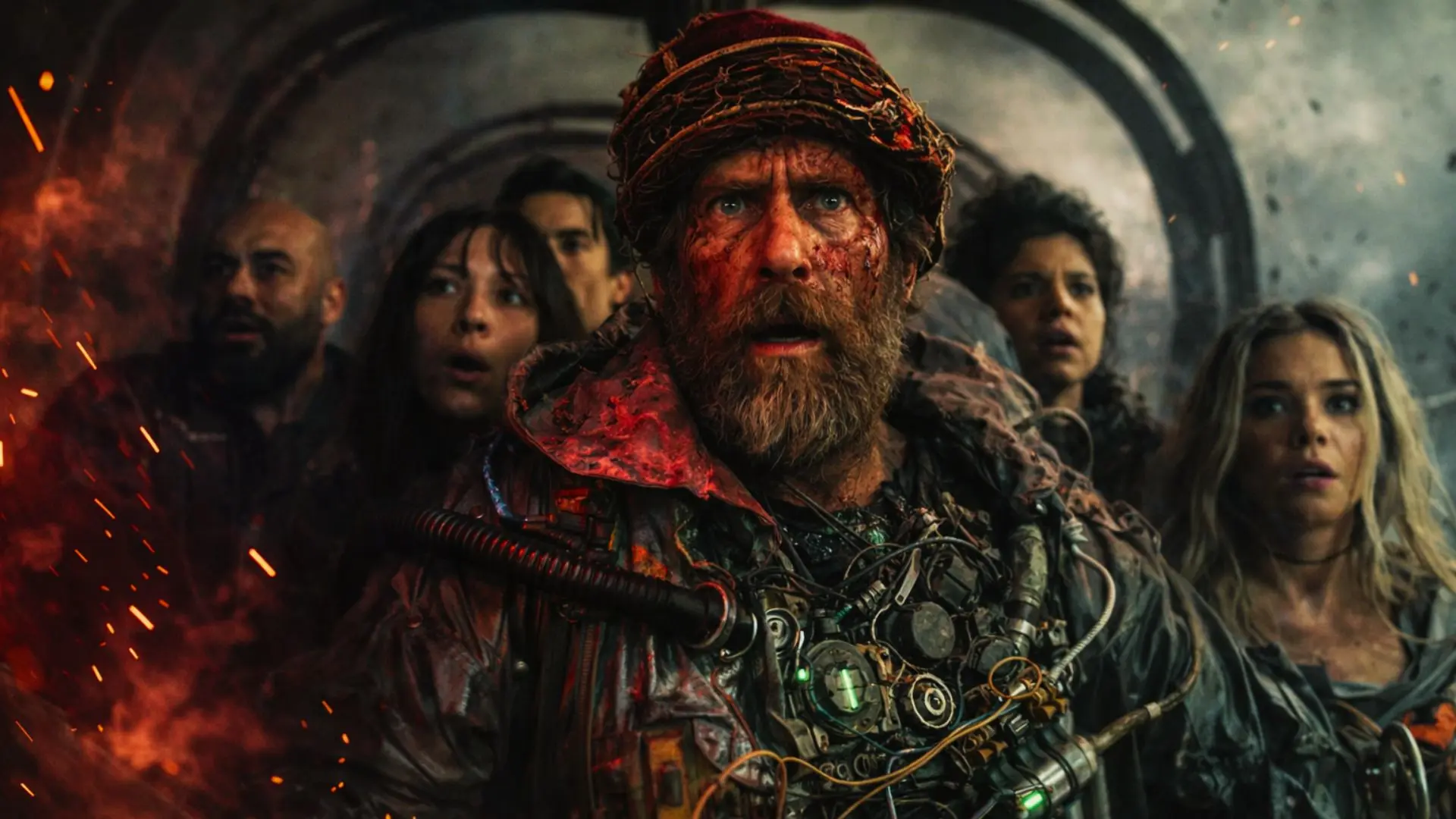
Rockwell plays a mysterious man who suddenly appears in a small diner, wearing a transparent poncho tangled with wires. At first glance he looks like a homeless wanderer, but he claims the outfit is fashionable in the future.
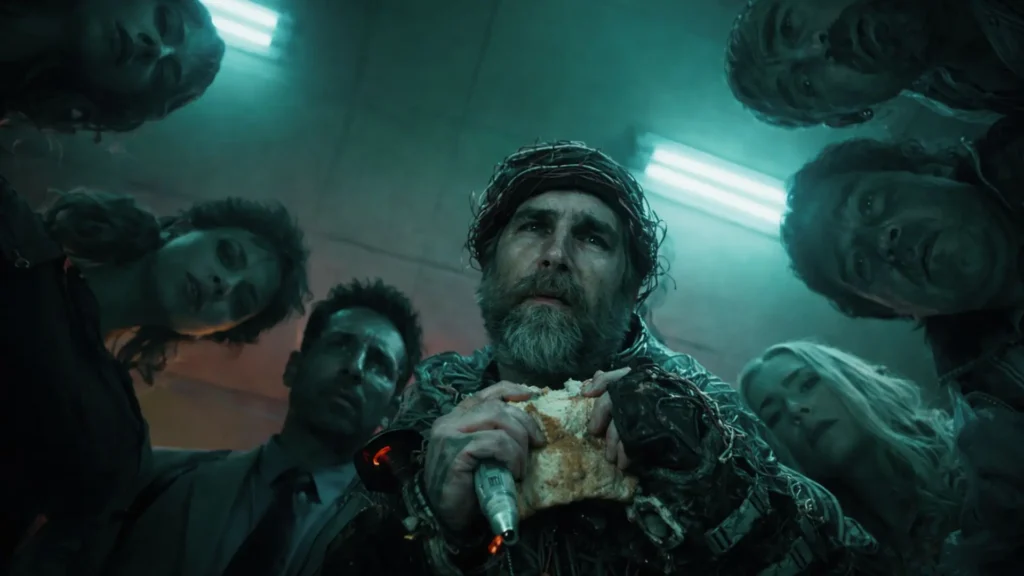
According to him, that future is bleak. Artificial intelligence has spiraled out of control, leaving the world devastated.
His mission is simple—but nearly impossible: stop a 10-year-old boy from creating the algorithm that eventually leads to AI domination.
There’s just one problem. He doesn’t know which group of people will help him succeed. In fact, this is already his 117th attempt to fix the timeline.
A Mismatched Team of Reluctant Heroes
The time traveler recruits a group of confused diner customers to help him change the future.
Among them are:
- Mark (played by Michael Peña), a schoolteacher
- Janet (played by Zazie Beetz), another teacher
- Susan (played by Juno Temple), a grieving mother
- Ingrid (played by Haley Lu Richardson), a mysterious “princess”
Although the story sounds absurd, the group doesn’t have much choice. The time traveler is wearing a bomb strapped to his chest, forcing them to take the mission seriously.
Echoes of Sci-Fi Classics
The film playfully nods to several iconic science-fiction movies without feeling like a copy of any of them.
Viewers may notice shades of:
- The Fisher King in Rockwell’s eccentric performance
- Twelve Monkeys with its time-travel chaos
- Brazil through its biting social satire
- Groundhog Day in its repeating attempts to fix the timeline
- Edge of Tomorrow and The Matrix in its sci-fi themes
Despite these influences, the movie still feels fresh. Instead of relying on nostalgia or franchise storytelling, it builds its own quirky universe.
Dark Humor Meets Social Commentary
Where the film truly stands out is its satire. Writer Matthew Robinson uses the story to highlight modern anxieties around technology, social media addiction, and artificial intelligence.
Several flashback sequences deliver some of the film’s most striking moments.
One storyline shows teachers confronting students who are so addicted to their phones that they barely react to serious crises around them. Another follows Susan, whose child dies in a school shooting only to be replaced by a clone.
The tone in these scenes is reminiscent of the unsettling social commentary seen in the series Black Mirror. At times, the humor is bold enough to feel closer to the biting satire of South Park.
Technology Addiction and the AI Debate
Beyond its humor, the film taps directly into real-world concerns about the rapid growth of artificial intelligence.
Rather than focusing on a dramatic robot uprising, the script explores how algorithms gradually reshape human behavior.
The movie portrays a world where:
- Students are consumed by screens
- Corporations profit from tragedy
- People rely on machines to make decisions
By exaggerating these trends only slightly, the film highlights how close modern society may already be to that dystopian future.
A Slightly Over-Explained Finale
The film’s only noticeable flaw appears during the climax.
At one point, the story pauses for a lengthy conversation that explains the philosophy behind the plot in detail. While the scene offers deeper character insights, it feels somewhat unnecessary.
The moment recalls the heavy exposition sequences found in the sequels to The Matrix. By that stage, the satire has already delivered its message effectively, so the extra explanation may feel excessive.
Impressive Visuals on a Modest Budget
Despite reportedly costing only $20 million, the film looks surprisingly polished.
Cinematographer James Whitaker creates a striking visual style using bold lighting, color contrasts, and creative staging. Practical effects blend smoothly with digital work, especially during the film’s robotic showdowns.
The visuals even rival large-budget productions like The Electric State, which reportedly cost more than ten times as much.
A Comeback for Gore Verbinski
For Verbinski, the film represents an important return.
The director found massive success with the first three films in the Pirates of the Caribbean franchise, but his career slowed after the box-office disappointment of The Lone Ranger in 2013.
Read also – ‘The Bride!’ Movie Review: Gothic Horror Meets Outlaw Romance in an Ambitious Reimagining
His last feature before this was A Cure for Wellness in 2016.
With its creative storytelling and sharp satire, Good Luck, Have Fun, Don’t Die suggests Verbinski is ready for a comeback. Even if the theatrical performance is modest, the film has all the ingredients of a future cult classic.
Final Verdict
Good Luck, Have Fun, Don’t Die is a rare sci-fi film that manages to be thought-provoking, funny, and visually inventive at the same time. With a charismatic performance from Sam Rockwell and sharp commentary on modern technology, the film stands out as one of the most original genre entries of the year.
Read also –
For viewers looking for smart science fiction with humor and edge, this darkly entertaining satire is well worth watching.