
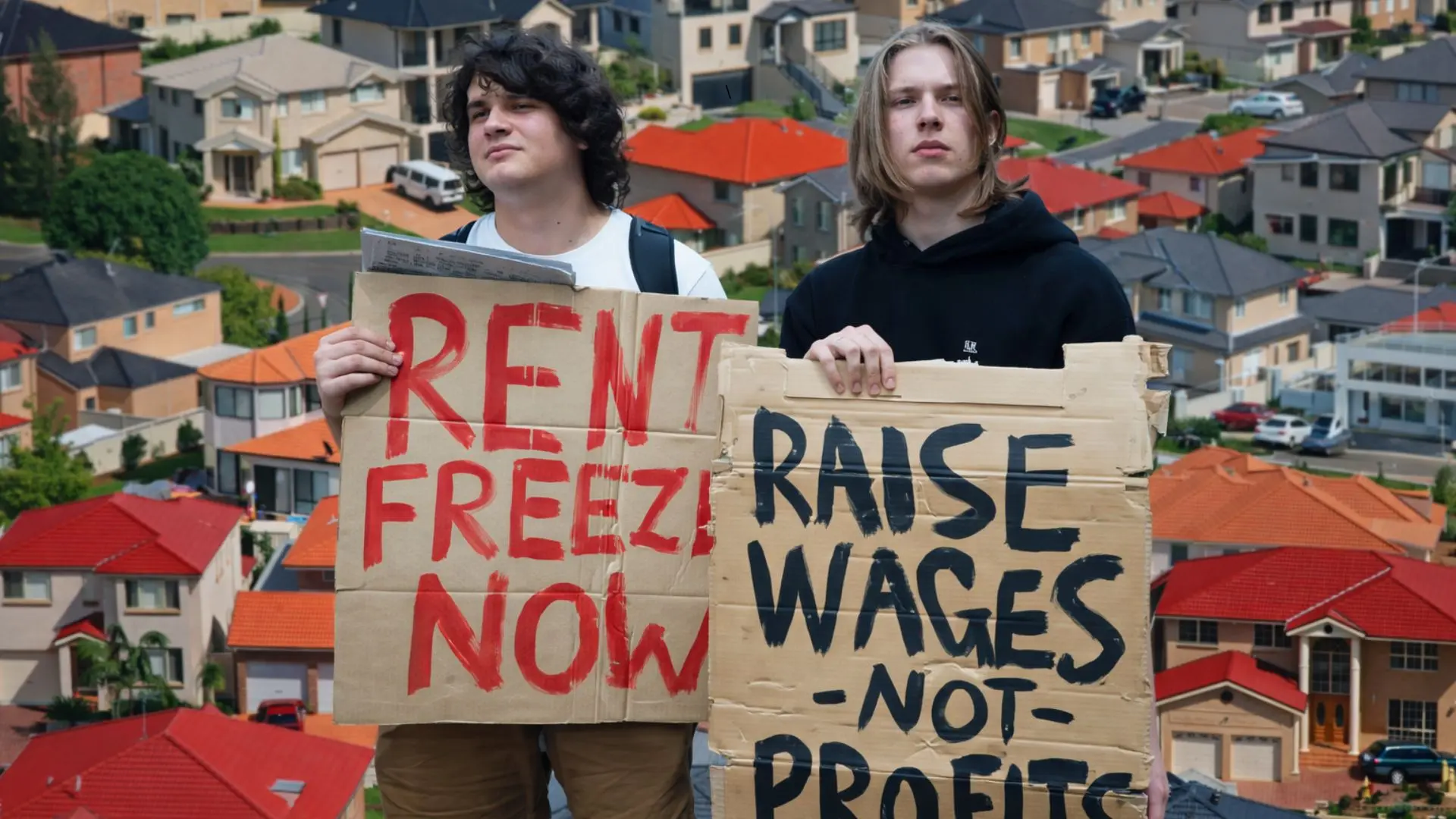
You don’t need to read an economic report to know something’s off. You hear it at weekend barbecues. You see it in Facebook community groups. You feel it when the rent notice lands in your inbox or the mortgage payment ticks up again.
For a lot of Aussie households right now, housing isn’t just another bill. It’s the bill. And it’s the one keeping people awake at night.
Across the country, from outer suburbs to regional towns that used to feel affordable, the cost of keeping a roof over your head has become the single biggest money worry for families, renters, and even people who thought they were “set” years ago.
It’s not just Sydney and Melbourne anymore
For a long time, rising housing costs felt like a big-city problem. Sydney was expensive. Melbourne was catching up. Everyone else watched from a distance.
That gap has closed.
Talk to renters in Brisbane, Adelaide or Perth and you’ll hear the same stories. Open homes with queues down the street. Weekly rents jumping by $50, $100, sometimes more. People applying for ten places and hearing nothing back.
Regional areas aren’t immune either. Towns that boomed during the pandemic are still dealing with the fallout. Locals are being priced out by city buyers, short-term rentals, and limited supply. Some are moving further out. Others are doubling up with family. A few are quietly wondering how long they can hang on.
Housing stress has stopped being a headline and started being a lived experience.
Renters feel trapped, not flexible
There’s a lot of talk about “renter mobility”, but that’s not how it feels on the ground. For many renters, moving isn’t a choice. It’s a risk.
People are staying in places they’ve outgrown because they’re scared of what’s out there. Couples delaying kids. Families squeezing into smaller homes. Singles paying a huge chunk of their income just to stay close to work.
Online forums are full of posts asking the same questions: Is this normal? Is anyone else paying this much? How are people doing it?
The answer, quietly, is that many aren’t. They’re cutting back everywhere else. No holidays. Fewer nights out. Cancelling streaming services. Skipping the car upgrade. Housing eats first, and everything else shrinks around it.
Homeowners aren’t feeling safe either
Owning a home used to come with a sense of security. These days, that feeling has cracked.
Mortgage holders, especially those who rolled off ultra-low fixed rates, have been hit hard. Monthly repayments have jumped hundreds, sometimes thousands of dollars. Budgets that once felt comfortable now feel tight. Very tight.
You hear it in casual conversations. People doing mental maths at the servo. Friends joking about “living on two-minute noodles” again. Tradies, teachers, office workers — all saying the same thing: the house payment dominates every financial decision.
Even people who bought years ago are feeling the pressure. Insurance is up. Council rates are up. Maintenance costs haven’t slowed. Owning a home hasn’t become cheaper — it’s just changed shape.
Why everyone’s talking about it now
Housing costs have always mattered. What’s changed is how fast they’ve moved and how little breathing room people feel they have.
Wages haven’t kept pace. Everyday costs — groceries, fuel, power — are already chewing through pay packets. When housing jumps on top of that, there’s nowhere left to adjust.
That’s why housing dominates talkback radio, comment sections, and dinner table conversations. It’s not abstract. It’s immediate. It’s personal.
Parents worry about their kids ever buying a home. Young adults wonder if renting forever is the new normal. Older Australians on fixed incomes are watching costs rise with no easy way to earn more.
Housing has become the pressure point where all the other financial stress shows up.
A national issue with no simple fix
This isn’t just about individual choices or budgeting better. Australia is dealing with a bigger structural problem.
We haven’t built enough homes for years. Population growth has outpaced supply. Construction costs remain high. Planning and approvals move slowly. Investors, owner-occupiers and renters are all competing in the same tight market.
Read also –Australian Driver Faces $11.8k Repair Bill on $16k Car After Insurance Fault Ruling
Governments talk about solutions — more supply, incentives, social housing, planning reform — and some of that is happening. But change in housing doesn’t show up overnight. It takes years.
In the meantime, households are stuck managing the now.
That gap between long-term policy and short-term reality is where the stress lives.
The quiet toll on everyday life
What often gets missed in the data is the emotional side of it.
Housing stress changes how people live. It makes them cautious. Less spontaneous. Less optimistic.
People put off career risks because the mortgage feels too big to gamble with. Relationships get tested. Mental health takes a hit. Even small things — like inviting friends over or planning a holiday — start to feel indulgent.
Read also –Tesla Scraps One-Off Payments for Full Self-Driving, Shifts to Subscription-Only Model
You see it in how careful people are with money conversations now. Less bragging. More comparing notes. More honesty about struggling.
There’s a shared sense that something fundamental has shifted.
What might come next
No one can say for sure where housing costs go from here. Some markets may cool. Others might keep rising. Interest rates could move either way. Supply will eventually improve, but slowly.
What does seem clear is that housing will stay front and centre in Australia’s money worries for a while yet.
Households are adapting, even if they don’t love it. Downsizing plans are getting pulled forward. Share housing is becoming more common again. Multi-generational living is back on the table for many families.
None of this feels dramatic when you look at it day by day. But step back, and it’s a noticeable shift in how Australians live.
A moment worth paying attention to
Australia has always been a country that values home. Owning one. Renting one. Building a life around it.
When housing starts to feel unstable, everything else wobbles a bit too.
That’s why rising housing costs aren’t just another economic issue. They’re the issue. The one shaping how people plan, spend, worry and hope.
You can hear it everywhere now — not in panic, but in a low, constant hum of concern.
And until housing feels manageable again, that hum isn’t going away.