

The Art of Restraint – In an era when modern cinema often relies on spectacle and visual excess, cinematographer Bin Luo believes in the power of restraint. While many films compete for attention through noise and rapid pacing, Luo focuses on what happens in the quiet spaces between moments. For him, silence is not empty — it is expressive.
Based in Los Angeles but deeply influenced by his Chinese heritage, Luo has developed a visual language that bridges two cinematic traditions. His work reflects both cultural depth and technical precision, shaped by years of disciplined practice and thoughtful observation.
The Art of Restraint -From Kunming to Hollywood
Bin Luo earned both his BFA and MFA from the New York Film Academy, but his path to becoming an award-winning cinematographer was gradual. He began as a second assistant camera, learning the craft from the ground up.
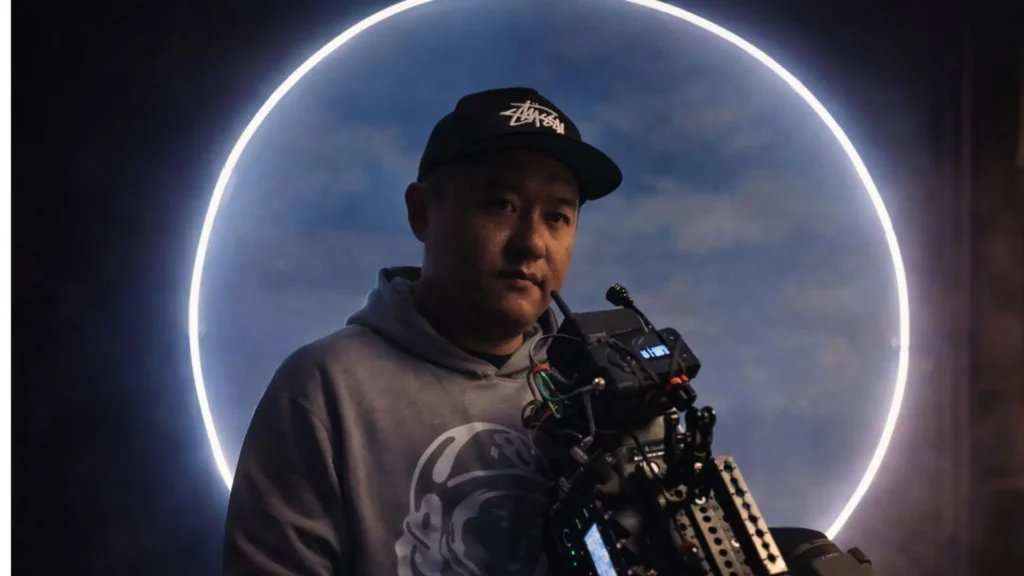
That early period taught him patience, humility, and attention to detail. Luo views cinematography not simply as a profession but as a continuous practice — a 24-hour commitment to understanding light, space, and human emotion.
Early Influences and Cultural Foundations
Luo’s artistic sensibility began forming in childhood. He recalls watching films from the Shanghai Animation Film Studio, whose poetic rhythm and careful compositions left a lasting impression. Even before he fully understood filmmaking, he sensed how images alone could convey feeling.
Growing up in Kunming, one of the few Chinese cities at the time with an active cinema culture, Luo had access to both local productions and international films, including French and American cinema. This exposure allowed him to absorb different pacing styles and storytelling methods simultaneously.
While performers like Jackie Chan and Stephen Chow influenced him with their precision and layered humor, it was directors known for restraint — such as Edward Yang and Zhang Yimou — who most profoundly shaped his perspective. Their subtle storytelling and cultural sensitivity helped him better understand how emotion can be conveyed visually without excess.
He also credits Hou Hsiao-hsien for teaching him the power of long takes and stillness, and animator Satoshi Kon for demonstrating how psychological depth and blurred realities can intensify narrative tension.
Eastern Texture, Western Structure
Working within Hollywood’s fast-paced system requires navigating clear genre arcs and dynamic storytelling frameworks. Luo approaches these structures as foundations rather than limitations.
He describes his method as a fusion: Western cinema often provides clarity, momentum, and accessibility, while Eastern traditions contribute atmosphere, reflection, and emotional subtlety. When combined carefully, these elements strengthen each other.
A film may appear structurally Western on the surface, yet within its frames lies a quieter emotional rhythm rooted in Eastern sensibilities. Luo believes that meaningful storytelling does not always require direct expression; sometimes what is left unsaid carries the greatest weight.
Exploring Interactive Cinema
Luo is also expanding his craft into interactive cinema, where audiences influence the narrative direction. In this evolving medium, he does not view technology as a distraction, but as a natural progression in the relationship between viewer and image.
His goal is to maintain emotional continuity even as story paths shift. This requires anticipating audience reactions and ensuring that every narrative branch feels intentional and grounded. For Luo, emotional truth must remain constant, regardless of structure.
Recognition and Continued Growth
Luo’s meticulous work has earned industry recognition. His film Jasmine received Best Cinematography at the MLC Awards, while 7 Minutes won the Silver Award for Best Cinematography at the 58th Houston International Film Festival (WorldFest–Houston) and additional honors at the Bangkok Movie Awards.
Despite these achievements, Luo continues to see himself as a student of light. He believes growth comes from constant observation — studying how light interacts with objects, spaces, and faces in everyday life.
Looking Ahead: Redefining “Home”
As he looks toward future projects, Luo is increasingly drawn to the theme of “home.” Having lived between China and the United States, he has come to see home not simply as a physical location, but as a layered concept shaped by memory, language, and human connection.
Read also- Bridgerton Season 4 Part 2 : Release Time, Plot Details and Trailer Updates
Existing between cultures has given him both perspective and complexity. At times, it means feeling connected to two worlds; at other times, slightly outside both. That tension itself has become a source of creative inspiration.
The Quiet Power of Space
Bin Luo’s cinematography reminds audiences that powerful storytelling does not always demand volume. Sometimes the most lasting impact comes from what is restrained — from the deliberate pause, the lingering frame, the unspoken emotion.
Read also- Lead Children Season 2 Release Date: Will the Netflix Drama Return?
He is not merely capturing images. He is preserving the quiet spaces between them — and within those spaces, meaning continues to unfold.